A well-organized camp kitchen turns meal prep from a frustrating chore into one of the best parts of any trip. But figuring out exactly what to buy (and what to skip) depends on your budget, your vehicle, and how many mouths you're feeding.
This guide breaks down camp kitchen setups across three price tiers, with specific gear recommendations and packing lists for both car camping and RV camping. No fluff, no filler. Just the gear that actually earns its spot in your camp kitchen box.
What Do You Actually Need in a Camp Kitchen?
Every functional camp kitchen boils down to five categories: a heat source, cookware, utensils, food storage, and cleanup supplies. Miss any one of these and you'll end up eating cold hot dogs off a paper plate (been there).
The table below shows what each category covers and why it matters.
| Category | Core Function | Budget Priority |
|---|---|---|
| Heat source | Boiling water, cooking meals | High (buy this first) |
| Cookware | Pots, pans, kettles | High |
| Utensils & prep | Knives, spatulas, cutting boards | Medium |
| Food storage | Coolers, dry bins, spice kits | Medium |
| Cleanup | Wash basin, soap, towels | Low priority but don't skip it |
Source: Leave No Trace Center for Outdoor Ethics camp cooking guidelines
Even if you're staying at a well-equipped spot like Cherry Hill Park with full hookups and a camp store nearby, having your own kitchen kit means you're never dependent on what's available. And if you're car camping at a more rustic site, it's the difference between eating well and eating poorly.
How Do You Set Up a Camp Kitchen for Under $50?
A solid budget camp kitchen costs between $30 and $50 and handles breakfast, lunch, and dinner for two people. The trick is buying multi-purpose items and skipping anything that only does one job.
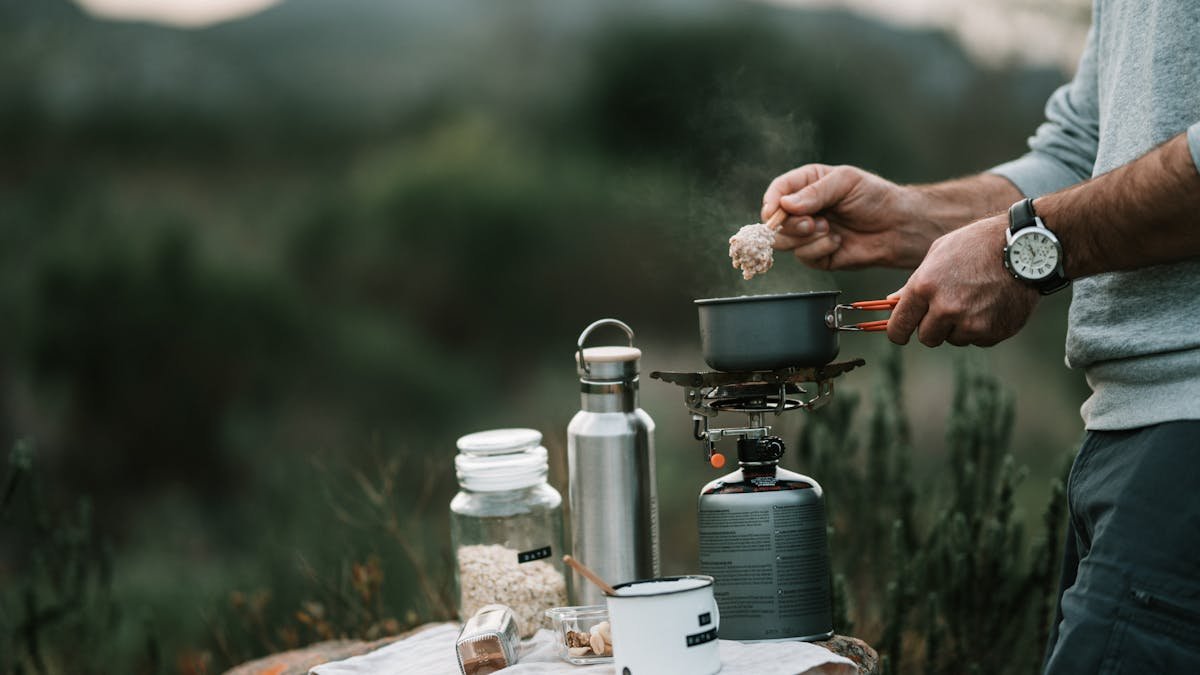
Your heat source at this tier is a single-burner propane stove. The Coleman PerfectFlow 1-Burner stove runs about $25 and has been the default recommendation for years because it works, it's compact, and replacement fuel canisters are sold at every gas station and Walmart within 50 miles of a campground.
For cookware, grab a basic nesting cook set. A single pot and pan combo (usually aluminum at this price) plus a lid that doubles as a plate will handle 90% of camp meals. Add a $3 metal spatula and a $2 wooden spoon, and your cooking utensil kit is done.
Here's a complete budget packing list:
- Single-burner propane stove (~$25)
- 16oz propane canister (~$4)
- Nesting pot and pan set (~$12)
- Metal spatula and wooden spoon (~$5)
- Paring knife (bring one from home)
- Plastic cutting board (dollar store)
- Roll of heavy-duty aluminum foil
- Two microfiber towels
- Small bottle of biodegradable camp soap
- Gallon zip-lock bags for food storage
- Collapsible water container (1-2 gallon)
Total cost: roughly $35-$48
At this level, your "cleanup station" is a zip-lock bag with a sponge and a travel-size bottle of Dr. Bronner's. It's not glamorous, but it works. Use one microfiber towel as a dish towel and the other as a makeshift trivet.
One honest limitation: a single-burner stove means you're cooking sequentially, not simultaneously. Boil water for coffee first, then cook eggs. Plan your meal timing accordingly.
What Does a Mid-Range Camp Kitchen ($50-$150) Look Like?
A mid-range setup dramatically improves your cooking flexibility and comfort. This is the sweet spot for families of three to four who car camp regularly or weekend warriors heading to spots like Greenbrier Campground in the Smokies.
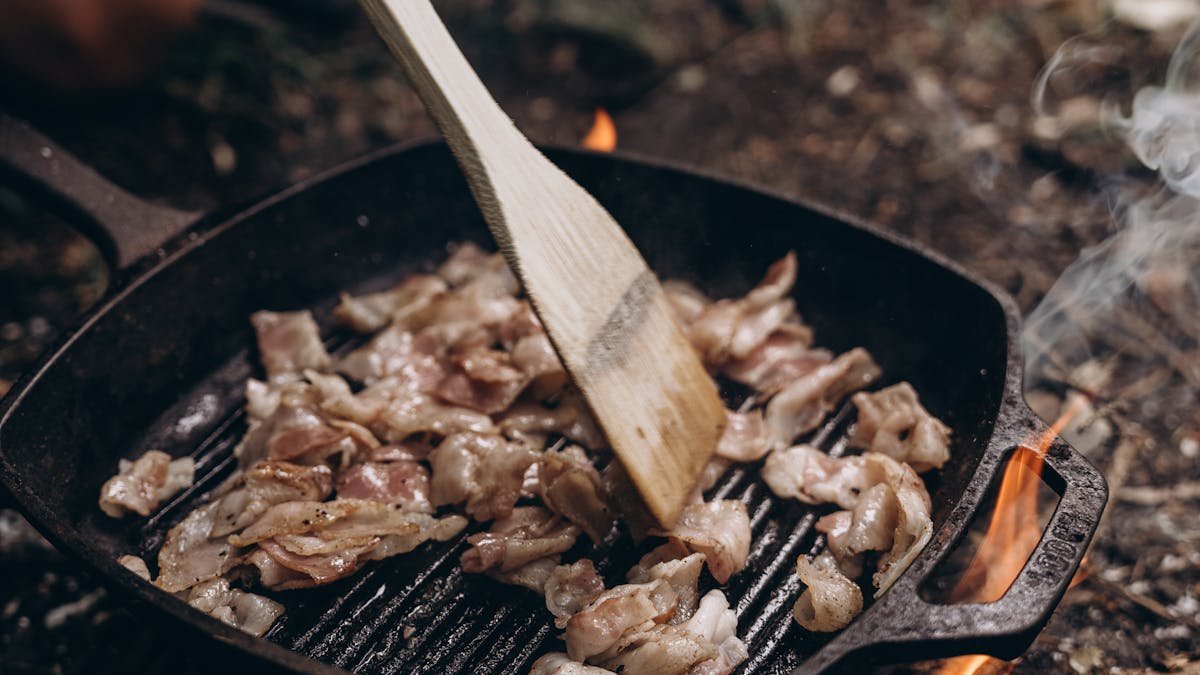
The biggest upgrade at this tier is moving to a two-burner stove. The Coleman Classic 2-Burner stove (around $45-$60) lets you boil water while frying bacon. That single change cuts your meal prep time nearly in half. If you're cooking for a group at a site with a picnic table, a two-burner stove is the minimum.
Cookware upgrades matter here too. Step up from aluminum to a hard-anodized or stainless steel set. A quality three-piece nesting set (small pot, large pot, and frying pan) will cost $30-$50 and last a decade. Cast iron is another option at this price point. A 10-inch Lodge cast iron skillet runs about $20 and is practically indestructible, but it's heavy and requires seasoning.
Here's what the mid-range setup includes that the budget tier doesn't:
- Two-burner propane stove with adjustable wind baffles
- Stainless steel or hard-anodized cookware set (3 pieces)
- Proper chef's knife in a blade guard (a cheap 8-inch Victorinox Fibrox works great)
- Collapsible wash basin for a real dish station
- Plastic camp kitchen box or tote to keep everything organized
- Headlamp for cooking after dark (you'll use this constantly)
- Insulated cooler (40-50 quart, hard-sided)
- Basic spice kit in small containers (salt, pepper, garlic powder, chili flakes, olive oil)
Total cost: roughly $80-$140
The camp kitchen box is a significant upgrade at this level. A simple plastic tote with a lid keeps your utensils, spices, towels, and cleanup supplies organized and ready to grab. Label it, keep it stocked between trips, and you'll cut your packing time by 20 minutes every outing.
For the cooler, don't overthink it. A mid-range hard-sided cooler from Coleman or Igloo in the 45-52 quart range holds enough food for a family of four across a long weekend. Pre-chill it the night before with a bag of ice, drain, then pack with fresh ice and food. Your ice lasts twice as long this way.
What's Included in a Premium Camp Kitchen Setup ($150+)?
A premium camp kitchen setup is built for serious camp cooks, long trips, and the kind of site where you're staying put for a week or more. Think RV camping at The Ridge Outdoor Resort in Tennessee or a basecamp setup for exploring Utah's canyon country near Castle Gate RV Park.
At this tier, you're not just eating. You're cooking real meals. Here's where the setup gets specialized.
| Gear Category | Budget Tier | Mid-Range Tier | Premium Tier |
|---|---|---|---|
| Stove | Single-burner propane | Two-burner propane | Two-burner + portable grill or griddle |
| Cookware | Aluminum nesting set | Stainless/hard-anodized set | Cast iron + stainless + Dutch oven |
| Prep surface | Cutting board on picnic table | Cutting board + camp table | Dedicated camp kitchen station with windscreen |
| Cooler | Soft-sided or styrofoam | 45-52qt hard-sided | 65qt+ rotomolded or 12V electric cooler |
| Storage | Zip-lock bags | Plastic tote | Organized camp kitchen box with compartments |
| Cleanup | Sponge + soap | Collapsible basin | Full wash/rinse/sanitize station |
Source: American Camp Association equipment recommendations
The premium stove setup often includes a two-burner stove paired with a standalone propane griddle or a portable charcoal grill. The Camp Chef Explorer series and the Blackstone 17-inch tabletop griddle are both popular choices that open up pancakes, smash burgers, and stir-fry territory.
Cookware at this level typically means a dedicated Lodge cast iron Dutch oven (the 6-quart is the most versatile size), a quality stainless steel pot, and a well-seasoned cast iron skillet. Add a percolator or a GSI JavaPress for campfire coffee that doesn't taste like sadness.
The real premium differentiator is the camp kitchen station itself. A freestanding camp kitchen table with a windscreen, prep surface, and storage shelves (like the Mountain Summit Gear Roll-Top Kitchen) keeps everything at counter height and off the ground. If you've ever spent a week crouching over a picnic table bench, you'll understand why experienced campers pay $80-$120 for a dedicated prep station.
Other premium additions worth the money:
- 12V electric cooler for RV camping (plugs into your vehicle or RV outlet, no ice needed)
- Folding camp table dedicated to food prep
- LED string lights or lantern positioned over the cooking area
- Portable spice rack with 10-15 seasonings
- Stainless steel water dispenser (5-gallon with spigot)
- Heavy-duty fire gloves for cast iron and Dutch oven work
Total cost: $200-$500+ depending on brand choices
One note on the 12V electric cooler: if you RV camp more than four or five times a year, this single purchase pays for itself in ice savings alone. A quality unit from Dometic or Alpicool keeps food at fridge temperature for days without draining your battery.
How Should You Pack a Camp Kitchen for Car Camping vs. RV Camping?
Car camping and RV camping have fundamentally different packing constraints, and your kitchen setup should reflect that.
For car camping, space and weight are real limitations. Everything needs to fit in one large tote or two medium totes. Stack your nesting cookware inside your largest pot. Wrap your knife in a dish towel and slide it along the edge of the tote. Put all liquids (oil, soap, fuel) in a separate zip-lock bag in case of leaks.
A practical car camping kitchen packing order:
- Place your stove flat on the bottom of the tote (or strap it to the outside)
- Stack cookware with utensils nested inside
- Wrap knife and sharp tools in towels
- Place spice kit and condiments in a small bag on top
- Keep the cooler separate and accessible (you'll open it constantly)
- Pack cleanup supplies in a mesh bag tied to the outside of the tote
For RV camping, you have the luxury of permanent or semi-permanent storage. Most RVers who camp frequently at well-equipped parks like Jellystone Park™ Tower Park or Stoney Creek RV Resort keep a fully stocked outdoor kitchen bin that lives in the basement storage compartment between trips.
RV kitchen packing tips that save headaches:
- Dedicate one storage compartment exclusively to outdoor kitchen gear
- Use shelf organizers or stackable bins inside the compartment
- Velcro-strap your propane stove to prevent sliding during transit
- Store cast iron in flour sack towels to prevent rust and cushion against impacts
- Keep a laminated checklist taped to the inside of the compartment lid
The biggest mistake RV campers make with their camp kitchen? Relying entirely on the indoor galley. Your RV kitchen is fine for morning coffee, but cooking a full dinner inside on a hot summer evening turns the rig into a sauna. Set up your outdoor kitchen under the awning and keep the interior cool.
What's the Best Way to Keep a Camp Kitchen Clean and Organized?
The three-basin wash system is the gold standard for camp kitchen cleanup: one basin for hot soapy water, one for rinse water, and one for sanitizing (a cap of bleach in cold water). At the budget level, you can fake this with two large pots and a collapsible basin.
Key cleanup rules that keep your camp kitchen functional trip after trip:
- Clean as you go. Wipe down pots and pans between uses. Dried-on food at camp is ten times harder to clean than at home.
- Strain food scraps out of your wash water before disposing of it. Pour gray water at least 200 feet from any water source.
- Dry everything thoroughly before packing. Damp cookware in a sealed tote grows mold fast.
- Use biodegradable soap only. Campsuds and Dr. Bronner's are the most common options.
- Pack trash bags. Double-bag food waste to keep animals out of your site.
At family-oriented campgrounds like Mountain River Family Campground in the North Carolina mountains, you'll usually have access to a dish washing station or utility sink. Use it. But still carry your own cleanup kit because those shared sinks run out of soap, and the sponges other campers leave behind are questionable at best.
Recommended Gear by Category
Here's a quick-reference list of the specific product categories that perform well across hundreds of camping trips. These are the types of gear worth researching before your next purchase.
Stoves:
- Single-burner: Coleman PerfectFlow or similar compact propane stove
- Two-burner: Coleman Classic or Camp Chef Everest
- Griddle add-on: Blackstone 17-inch tabletop griddle
Cookware:
- Budget: GSI Outdoors Bugaboo Camper nesting set
- Mid-range: Stanley Adventure Base Camp cook set
- Premium: Lodge cast iron skillet (10-inch) + Lodge 6-quart Dutch oven
Coolers:
- Budget: Coleman 48-quart hard-sided cooler
- Mid-range: Igloo BMX 52-quart
- Premium: Dometic CFX3 35 electric cooler (for RV use)
Organization:
- Plastic tote with snap-lid (budget)
- Camp kitchen box with dividers (mid-range)
- Freestanding camp kitchen station with windscreen (premium)
Cleanup:
- Biodegradable camp soap (Campsuds or Dr. Bronner's)
- Collapsible silicone wash basin
- Quick-dry microfiber camp towels
Frequently Asked Questions
What is the most important piece of camp kitchen gear?
Your stove. Without a reliable heat source, everything else is just accessories. Invest in the best stove your budget allows, then build around it. A single-burner propane stove handles the majority of camp cooking tasks.
Can I use my camp kitchen setup for both car camping and RV camping?
Yes. A well-built camp kitchen tote transfers directly between your car trunk and an RV storage compartment. The only difference is that RV campers can add heavier items (cast iron, electric coolers) and leave the kit semi-permanently packed.
How do I keep food cold without an electric cooler?
Pre-chill your hard-sided cooler overnight before the trip. Use block ice instead of cubed ice (it lasts two to three times longer). Keep the cooler in the shade, and open it as infrequently as possible. Freeze water bottles to serve as both ice packs and drinking water.
Is cast iron worth the weight for camping?
For car camping and RV trips, absolutely. A seasoned cast iron skillet provides even heat, works on any stove or campfire, and lasts a lifetime. For backpacking or bike touring, skip it and go with titanium or aluminum.
What camp kitchen supplies do most people forget to pack?
A sharp knife (or any knife at all), a can opener, cooking oil, aluminum foil, and trash bags. A surprising number of campers also forget matches or a lighter despite owning a stove that requires manual ignition.
Do I really need a camp kitchen table or station?
For weekend trips, a campsite picnic table works fine. For extended stays or group cooking, a freestanding kitchen station saves your back and keeps everything organized. It becomes essential once you're cooking for more than four people.