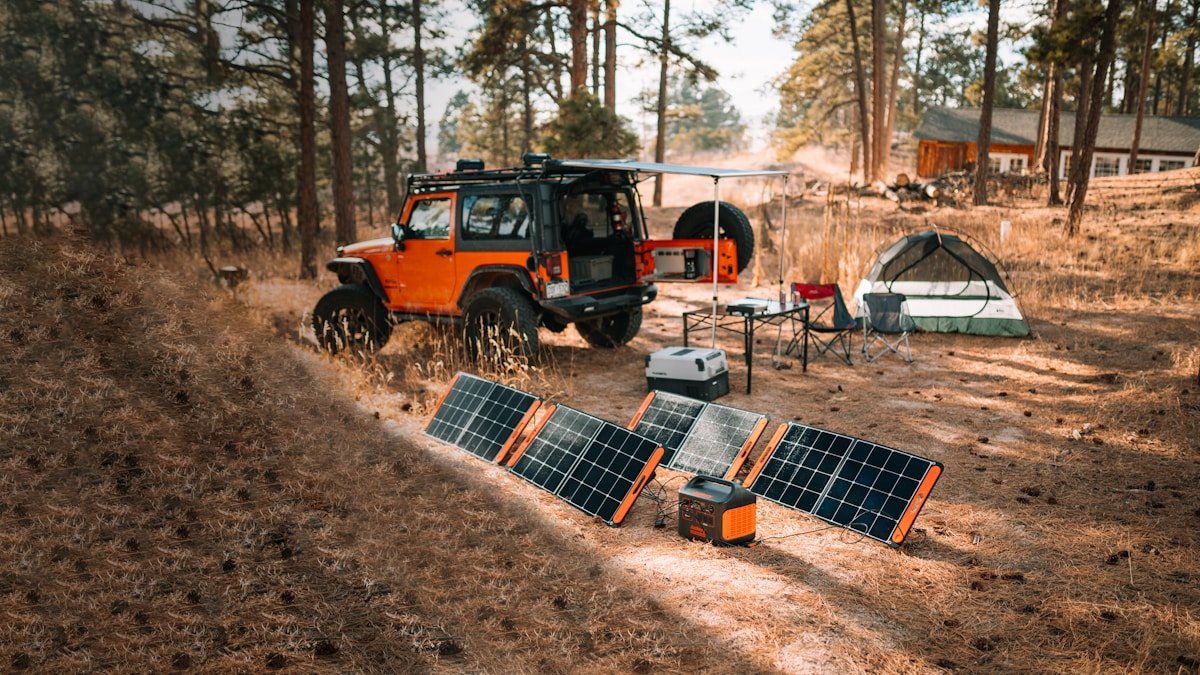
A portable power station can turn a primitive campsite into a fully functional outdoor kitchen, charge every device your family owns, and keep your CPAP running all night long. But with dozens of models on the market from Jackery, EcoFlow, Bluetti, and Goal Zero, choosing the right one takes more than just reading spec sheets. This guide breaks down wattage needs, solar charging speed, brand-by-brand comparisons, and which unit actually matches the way you camp.
I've tested power stations everywhere from dry desert sites near Kanab RV Corral to shaded mountain loops at Mountain River Family Campground. The right choice depends on your gear list, your tolerance for carrying weight, and how long you plan to stay off-grid.
How Much Power Do You Actually Need for Camping?
The single most important number is your total daily watt-hour (Wh) consumption, not the peak wattage printed on the box. To figure it out, list every device you plan to run and multiply its wattage by the hours you'll use it each day.
Here's a quick reference for the appliances campers ask about most:
| Appliance | Typical Wattage | Hours/Day | Daily Wh |
|---|---|---|---|
| CPAP machine (without heated humidifier) | 30-60 W | 8 | 240-480 Wh |
| 12V compressor fridge/freezer | 40-60 W | 24 (cycles ~40%) | 384-576 Wh |
| Phone charging (per phone) | 15-20 W | 2 | 30-40 Wh |
| Laptop charging | 60-100 W | 3 | 180-300 Wh |
| LED string lights | 10-20 W | 5 | 50-100 Wh |
| Electric kettle (1000 W) | 1000 W | 0.15 (one boil) | 150 Wh |
| Portable space heater (small) | 750 W | 3 | 2250 Wh |
| Blender | 300-600 W | 0.05 | 15-30 Wh |
| 50" TV | 80-120 W | 3 | 240-360 Wh |
Source: U.S. Department of Energy appliance energy estimates
A few things jump out immediately:
- CPAP users can get by with a 500 Wh unit if that's the only significant load. Turn off the heated humidifier to cut draw roughly in half.
- Running a mini-fridge 24/7 is the biggest constant drain most campers face. Budget 400-600 Wh per day just for that.
- Heating appliances are power killers. An electric kettle for one morning boil is fine. A space heater for three hours will drain even a 2000 Wh station.
- Phone and device charging is almost negligible. You do not need a 1000 Wh station just to charge phones.
Add up your realistic daily use. Most weekend tent campers land between 200-600 Wh per day. RV boondockers running a fridge, lights, and multiple devices typically need 800-1500 Wh per day.
Which Portable Power Station Brand Is Best: Jackery vs. EcoFlow vs. Bluetti vs. Goal Zero?
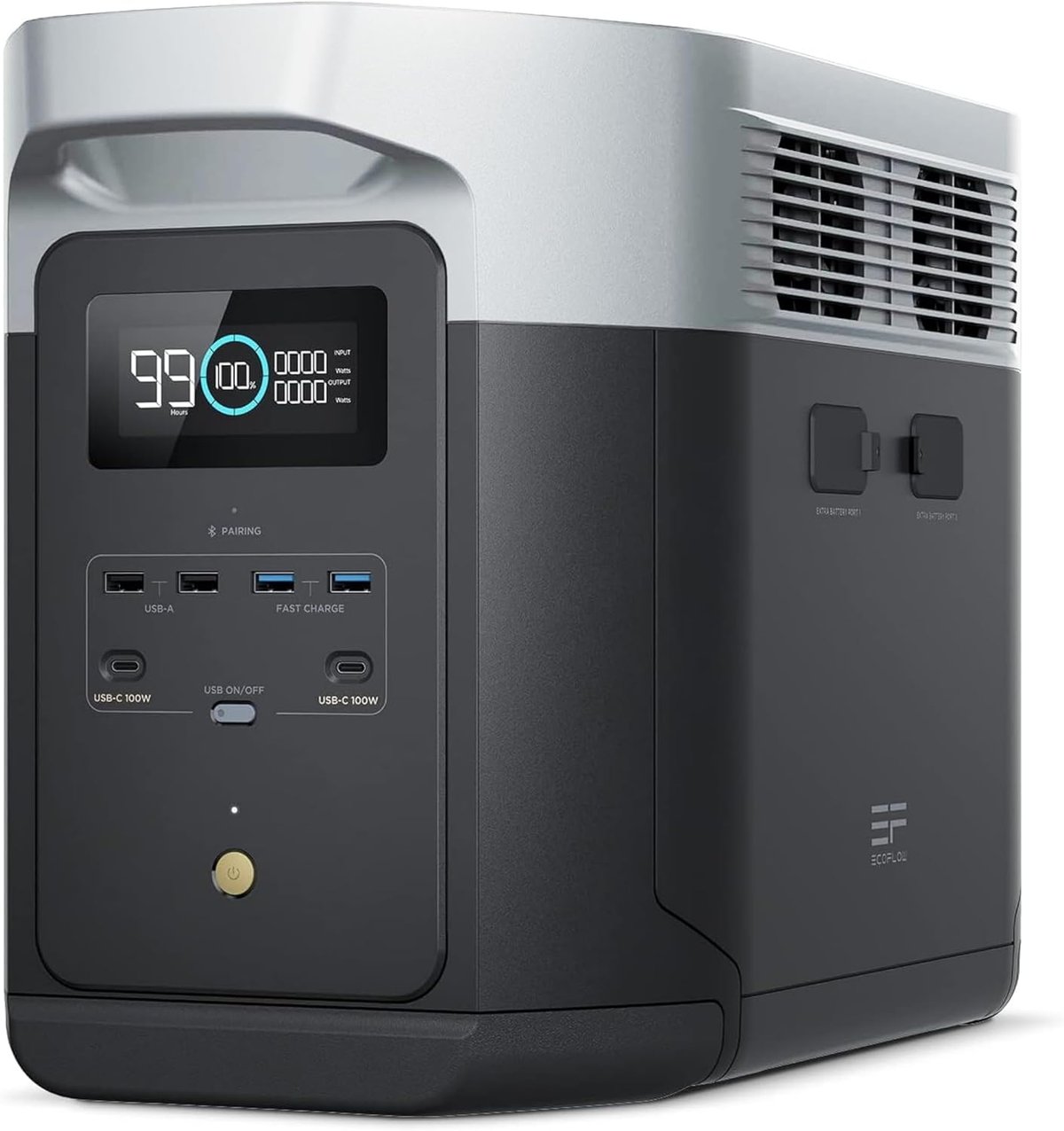
No single brand wins across every category. Jackery leads in ease of use, EcoFlow dominates in fast charging and smart features, Bluetti offers the best value per watt-hour in larger units, and Goal Zero has earned a reputation for long-term durability.
Here's a head-to-head comparison of the most popular mid-to-large models from each brand:
| Feature | Jackery Explorer 1000 Plus | EcoFlow DELTA 2 Max | Bluetti AC200L | Goal Zero Yeti 1500X |
|---|---|---|---|---|
| Capacity | 1264 Wh | 2048 Wh | 2048 Wh | 1516 Wh |
| Continuous Output | 2000 W | 2400 W | 2400 W | 2000 W |
| Weight | 31.5 lbs | 50.7 lbs | 62.4 lbs | 45.6 lbs |
| AC Wall Recharge Time | ~1.7 hrs | ~1.6 hrs | ~1.5 hrs | ~6 hrs |
| Max Solar Input | 800 W | 1000 W | 1200 W | 600 W |
| Expandable Battery | Yes | Yes | Yes | Yes (via Link) |
| App Control | Yes | Yes | Yes | Yes |
| Price Range | $1,099-$1,299 | $1,599-$1,899 | $1,499-$1,799 | $1,699-$1,999 |
Source: Jackery, EcoFlow, Bluetti, and Goal Zero published product specifications as of spring 2026
Jackery Explorer 1000 Plus
Jackery's interface is the simplest of the bunch. The screen is clean, the buttons are intuitive, and the companion app stays out of your way. At 31.5 pounds, it's also the lightest option in this tier, which matters when you're loading gear into a truck bed.
The 800 W solar input pairs well with Jackery's own SolarSaga panels. Expandability through add-on battery packs lets you scale up to 5000 Wh without replacing the core unit. The main trade-off: you get less total capacity out of the box compared to the EcoFlow and Bluetti competitors at a similar price.
EcoFlow DELTA 2 Max
EcoFlow's X-Stream charging technology is genuinely impressive. Going from zero to 80% on a wall outlet in about an hour means you can top off the night before a trip without much planning. The 2400 W continuous output handles high-draw appliances like air fryers and small AC units that would shut down lesser stations.
The smart app integration is the deepest of any brand. You can monitor individual outlet loads, adjust charging speeds to reduce battery wear, and set custom output limits. The DELTA 2 Max is a strong pick for RV travelers parking at spots like Castle Gate RV Park who want to supplement hookups or prepare for sites without full electric.
Bluetti AC200L
Bluetti consistently undercuts competitors on price-per-watt-hour, and the AC200L is no exception. At 2048 Wh with 2400 W output, you get EcoFlow-level specs at a noticeably lower price. The 1200 W max solar input is the highest on this list, making it an excellent match for extended boondocking trips.
The trade-off is weight. At over 62 pounds, this is not a grab-and-go unit. It lives in your RV, truck bed, or at a semi-permanent basecamp. The build quality is solid, and the LiFePO4 battery chemistry means a longer cycle life (3,500+ cycles to 80% capacity) compared to standard lithium-ion cells.
Goal Zero Yeti 1500X
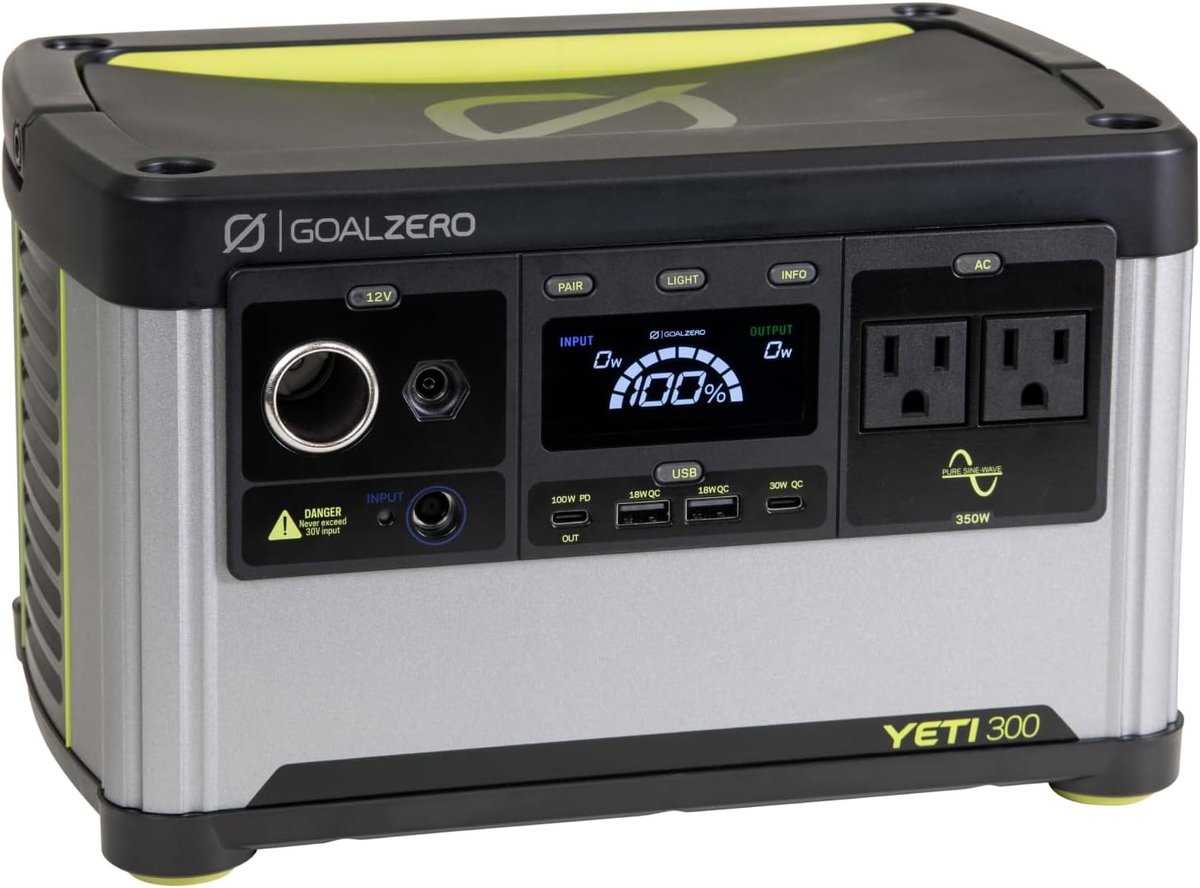
Goal Zero has been in the portable power game longer than any competitor on this list. The Yeti lineup carries a premium price, but owners consistently report units lasting five or more years of regular use. Build quality and customer service are the primary selling points.
The 6-hour wall recharge time is the biggest weakness. If you forget to charge the Yeti before leaving for a weekend at Yellowstone Grizzly RV Park, you might arrive with a half-full battery. Solar input maxes at 600 W, which is adequate but behind the competition.
Quick Verdict by Use Case
- Best for tent camping and backpacking basecamp: Jackery Explorer 1000 Plus (lightest, simplest)
- Best for RV boondocking: EcoFlow DELTA 2 Max (fast charging, high output, smart controls)
- Best value for large capacity: Bluetti AC200L (most Wh per dollar, highest solar input)
- Best for long-term reliability: Goal Zero Yeti 1500X (proven track record, premium build)
What Size Power Station Do You Need for Your Camping Style?
Match the station to the trip, not the other way around. A weekend car camper and a full-time RV boondocker have fundamentally different power budgets.
Small (300-600 Wh): Weekend Tent Camping
A unit in this range handles phone charging, LED lighting, a small Bluetooth speaker, camera batteries, and a CPAP machine. You won't run a fridge or an electric kettle, but you'll keep all your essentials alive for two to three nights without a recharge.
Good picks in this tier:
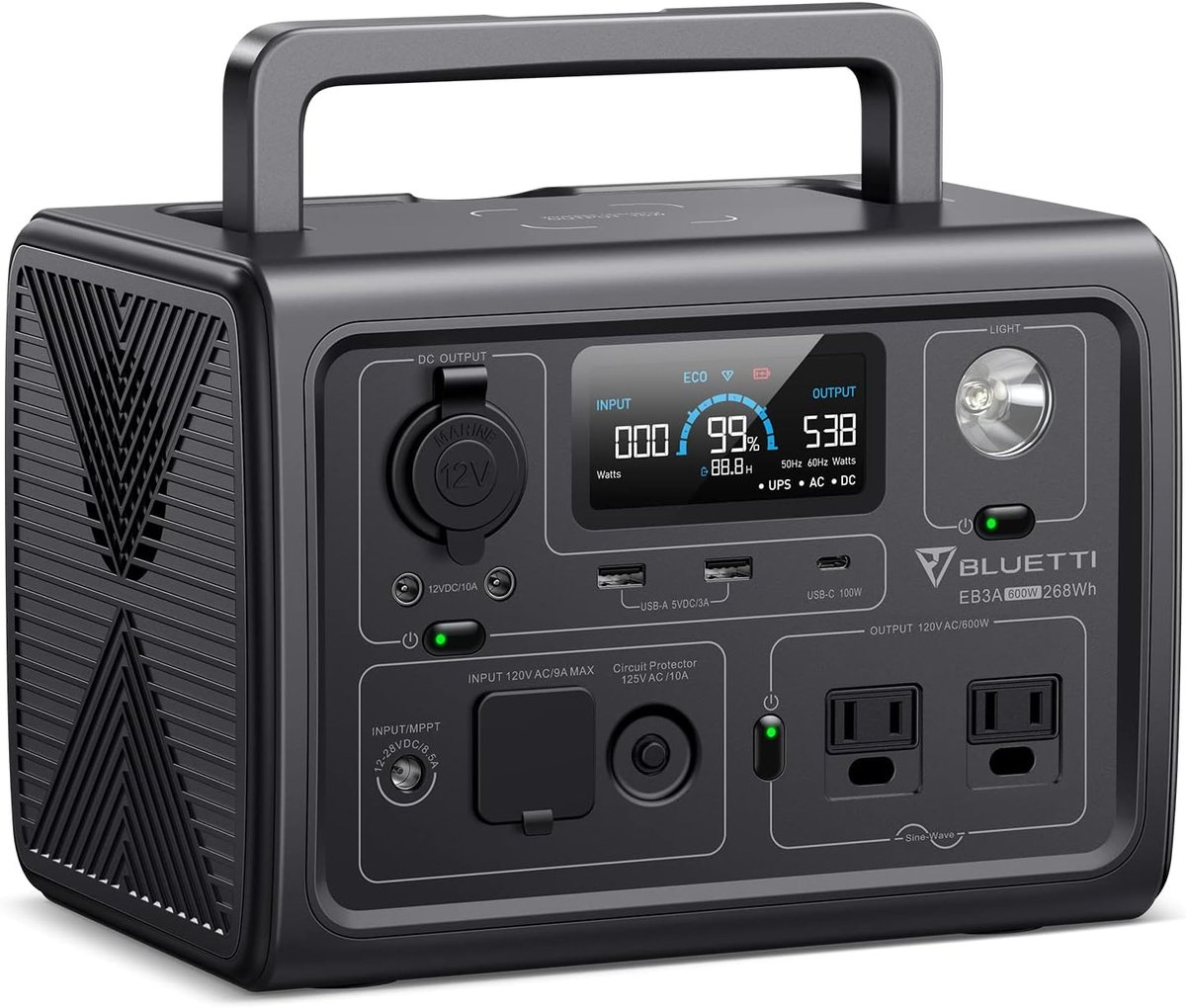
- Jackery Explorer 300 Plus (288 Wh, 10 lbs)
- EcoFlow RIVER 2 (256 Wh, 7.7 lbs)
- Bluetti EB3A (268 Wh, 10.1 lbs)
- Goal Zero Yeti 200X (187 Wh, 5 lbs)
These are light enough to carry from the parking lot to a walk-in site. I've packed an EcoFlow RIVER 2 on backcountry trips to keep camera gear charged during multi-day shoots.
Medium (1000-1500 Wh): Car Camping and Short RV Trips
This is the sweet spot for most campers. You can run a 12V compressor fridge, charge multiple devices, brew a pour-over with an electric kettle, and still have juice left after a full day. Paired with a 200 W solar panel, you can extend a weekend trip to four or five days without outside power.
This size shines at campgrounds with partial hookups or no electric, like the shaded sites at Greenbrier Campground in the Smokies. Plug in your fridge, set up the solar panel on the picnic table, and forget about it.
Large (2000+ Wh): Extended Boondocking and Full-Time RV Life
Once you cross the 2000 Wh threshold, you're powering a small household. Air conditioners (briefly), microwaves, induction cooktops, and multiple appliances can all run simultaneously. RV travelers who spend weeks at a time away from hookups need this category.
At this level, consider expandable systems. The EcoFlow DELTA Pro with extra batteries can reach 10,800 Wh. Bluetti's AC200L plus B300 expansion packs can hit 8,192 Wh. You're essentially building a custom off-grid battery bank.
Full-timers who rotate between hookup sites like The Ridge Outdoor Resort and dry camping on public land benefit from a large expandable system that charges fully at the resort and sustains several days of boondocking between stops.
How Fast Can You Charge a Power Station With Solar Panels?
Solar recharge time depends on three factors: panel wattage, the station's maximum solar input, and actual sunlight conditions. Manufacturer claims assume perfect lab conditions. Real-world output typically runs 60-80% of the rated panel wattage.
Here's a realistic solar charging estimate for a 2000 Wh station:
| Solar Setup | Rated Wattage | Real-World Output (~70%) | Hours to Full Charge (2000 Wh) |
|---|---|---|---|
| Single 100 W panel | 100 W | 70 W | ~28 hrs |
| Two 200 W panels | 400 W | 280 W | ~7 hrs |
| Two 400 W panels | 800 W | 560 W | ~3.5 hrs |
| Four 200 W panels | 800 W | 560 W | ~3.5 hrs |
Source: Solar Energy Industries Association (SEIA) average panel efficiency data for portable solar applications
Tips for Maximizing Solar Charging Speed
- Angle panels directly at the sun. Laying a panel flat on the ground can cost you 20-30% of potential output. Prop it up with an adjustable kickstand or lean it against a cooler.
- Move panels throughout the day. The sun shifts. Re-angling your panels every two to three hours makes a measurable difference.
- Avoid shade, even partial shade. A shadow across 10% of a panel can cut total output by 30-50%, depending on the panel's bypass diode configuration.
- Keep panels cool. Solar panels lose efficiency as they heat up. Raising them slightly off hot ground with a stand improves airflow and output.
- Buy panels from the same brand as your station. Proprietary connectors and voltage matching usually work better with matched equipment, though MC4 adapters allow mixing and matching.
For desert camping near places like Kanab RV Corral in southern Utah, solar charging is practically effortless. Six-plus hours of direct sun and wide-open sky mean even a modest 200 W panel setup keeps a medium station topped off daily. In the dense tree canopy of the Smokies or Pacific Northwest, expect to rely more on wall or car charging.
What About Charging From Your Vehicle?
Most power stations include a 12V car charging cable, but the speed varies dramatically. Standard cigarette lighter outlets in most vehicles are fused at 10-15 amps, which means 120-180 W of charging power. At that rate, a 1000 Wh station takes roughly six to eight hours of driving to fully charge.
Some newer stations (notably EcoFlow and Bluetti) support higher-wattage car charging through dedicated DC cables that connect directly to the vehicle's battery or a secondary alternator. This can push charging speeds to 400-600 W, cutting drive-time charging to a couple of hours.
A practical strategy for road-trip campers:
- Charge fully at home or at a hookup site before departure.
- Run the car charger during long driving days between camps.
- Deploy solar panels at camp to maintain or top off the station.
- Reserve wall charging for stops at full-hookup RV parks.
This rotation keeps most campers powered indefinitely without ever fully draining the station.
Recommended Gear
Beyond the power station itself, a few accessories make the whole setup more practical:
- Portable solar panels (200 W minimum for serious use). Foldable panels from Jackery, EcoFlow, Bluetti, or Renogy store easily and set up in seconds.
- MC4 to Anderson Powerpole adapters. If you want to mix panel brands or connect to an RV's existing solar wiring, these adapters are essential.
- A heavy-duty extension cord (10 or 12 gauge, 25 ft). Lets you position the station in your RV or tent while running an appliance outside, or vice versa.
- A kill-a-watt meter or similar wattage monitor. Plug in each appliance before your trip to measure its actual draw. Published specs are often inaccurate.
- A quality surge protector rated for your station's output. Protects sensitive electronics like laptops and CPAP machines from voltage spikes.
- A padded carrying case or storage bag. Not all stations come with one. A good case protects the unit during transport and keeps cables organized.
If you're running a power station as a backup at an RV park with hookups (common at places like Cherry Hill Park near Washington, D.C.), a 30-amp surge protector for your shore power connection is still a smart investment. The station handles outages; the surge protector handles dirty power.
How Long Will a Portable Power Station Last Before Needing Replacement?
Battery longevity depends on chemistry. Most modern portable power stations use one of two lithium battery types, and the difference in lifespan is significant.
LiFePO4 (Lithium Iron Phosphate): Found in the Bluetti AC200L, EcoFlow DELTA 2 Max, and newer Jackery Plus models. Rated for 3,000-3,500+ charge cycles before dropping to 80% original capacity. At one full cycle per day, that's roughly 8-10 years. In practice, most campers cycle their station once or twice per week, meaning the battery will likely outlast the electronics.
NMC (Nickel Manganese Cobalt): Found in older Jackery Explorers and Goal Zero Yeti models. Rated for 500-800 cycles to 80% capacity. Still adequate for weekend campers who use their station 30-50 times per year, but full-timers should strongly consider LiFePO4 units.
Key habits to extend battery life:
- Store the station between 30% and 80% charge when not in use.
- Avoid leaving it plugged into a wall charger indefinitely.
- Keep the station out of extreme heat (above 110°F) and extreme cold (below 32°F) during storage.
- Use eco mode or power-saving modes to reduce idle drain.
Frequently Asked Questions
Can I run an RV air conditioner on a portable power station?
Yes, but only briefly and only with a large unit. A typical RV rooftop AC draws 1200-1500 W running and up to 3000 W on startup. A 2000 Wh station with 2400+ W output can handle it, but expect to drain the battery in about one to two hours. This is useful for cooling down the RV before bed, not for all-day climate control.
Is it safe to use a portable power station inside a tent or RV?
Portable power stations produce no exhaust, unlike gas generators, so they are safe to use indoors. Place the unit on a flat, stable surface away from bedding or fabric. Ensure ventilation around the fan vents so the station can cool itself during heavy loads.
How does a portable power station compare to a traditional gas generator?
Power stations are quieter (often silent under light loads), produce zero emissions, require no fuel, and need virtually no maintenance. Gas generators are cheaper per watt for very high-output needs and can run indefinitely with fuel. For most campers running under 2000 W of gear, a power station is the better choice.
Can I charge a portable power station while using it simultaneously?
Yes. This is called pass-through charging, and all four major brands support it. The station charges from solar or a wall outlet while powering your devices. Be aware that heavy pass-through use may generate extra heat and can slightly reduce long-term battery lifespan on NMC units.
Do I need a solar panel from the same brand as my power station?
Not necessarily. Most stations accept input via standard MC4 connectors or Anderson Powerpole connectors. However, same-brand panels typically guarantee voltage and connector compatibility without adapters. If you go third-party, verify that the panel's open-circuit voltage (Voc) falls within the station's accepted input range.
What portable power station size do I need for a CPAP machine?
A 300-500 Wh station handles most CPAP machines for a full night (8 hours) if you disable the heated humidifier and heated tube. With the humidifier on, power draw roughly doubles. For a week of camping with CPAP use only, a 500 Wh station paired with a 100 W solar panel is a reliable setup.