You just bought your first RV, signed a seasonal site lease, or scored a used camper that needs everything. Now comes the part nobody warns you about: outfitting the thing costs almost as much as the rig itself if you aren't strategic. The good news? You can fully stock a comfortable, functional RV kitchen, bedroom, and living space for under $500 if you know where to shop and what actually matters.
This guide breaks down exactly what to buy, where to buy it, and which items deserve real money versus dollar-store prices. I've stocked three different rigs over the years (a 28-foot travel trailer, a Class C, and a pop-up), and the lessons learned the hard way are all here so you don't have to repeat them.
How Much Does It Really Cost to Stock an RV From Scratch?
A full RV setup typically runs between $300 and $1,200 depending on how much you already own and how aggressively you bargain hunt. Most first-timers overspend because they treat it like furnishing a small apartment, buying duplicates of everything they have at home.
The trick is breaking your budget into tiers. Not everything needs to be premium, and not everything should be the cheapest option on the shelf.
| Category | Budget Tier | Mid-Range Tier | Premium Tier |
|---|---|---|---|
| Kitchen essentials | $40–$60 | $80–$120 | $150–$200 |
| Bedding & linens | $30–$50 | $70–$100 | $120–$180 |
| Organization & storage | $20–$40 | $50–$80 | $100–$150 |
| Bathroom supplies | $15–$25 | $30–$50 | $60–$90 |
| Outdoor setup (chairs, mat, lights) | $30–$60 | $80–$130 | $150–$250 |
| Safety & electrical | $40–$70 | $80–$120 | $130–$200 |
| Total estimate | $175–$305 | $390–$600 | $710–$1,070 |
Source: AllCampsAndParks.com pricing survey of Walmart, Amazon, and Dollar General listings, April 2026
The budget tier gets you functional. The mid-range tier gets you comfortable for extended stays. The premium tier is for full-timers or those who camp 30+ nights per year and need durability.
What Kitchen Gear Should You Buy at Dollar Stores vs. Walmart vs. Amazon?
Your RV kitchen is where the biggest savings (and biggest mistakes) happen. Dollar General and Dollar Tree carry surprisingly usable cooking basics, but certain items fall apart after two camping trips.
Buy cheap (Dollar General / Dollar Tree / thrift stores):
- Spatulas, wooden spoons, and basic utensils
- Dish towels and pot holders
- Plastic cutting boards (replace every season)
- Measuring cups and spoons
- Can openers
- Plastic plates and cups for kids
- Spice containers and small storage bins
Buy mid-range (Walmart / Target):
- A nesting pot and pan set (the Ozark Trail or Mainstays sets run $15–$25 and hold up well)
- A compact dish drying rack
- A pour-over coffee maker or small French press
- Melamine dinnerware sets (much sturdier than dollar-store plastic)
- A basic knife set with a magnetic strip mount
Buy quality (Amazon / REI / specialty):
- A cast iron skillet. This is not optional. A Lodge 10-inch skillet will outlast your RV and costs around $20–$25. It works on propane stovetops, campfires, and induction plates.
- A quality water filtration pitcher or inline RV water filter. Campground water varies wildly, and the filter at Cherry Hill Park will taste different from the hookup at a BLM site in Utah.
- An electric kettle if you have shore power access. Uses less propane and boils faster.
One hack from the YouTube budget-stocking community that actually works: buy a $5 utensil crock from a thrift store and mount it with Command strips or a small shelf. It keeps your cooking tools accessible without taking up counter space, which is critical when your entire kitchen counter is 18 inches wide.
How Do You Organize a Small RV Without Spending a Fortune?
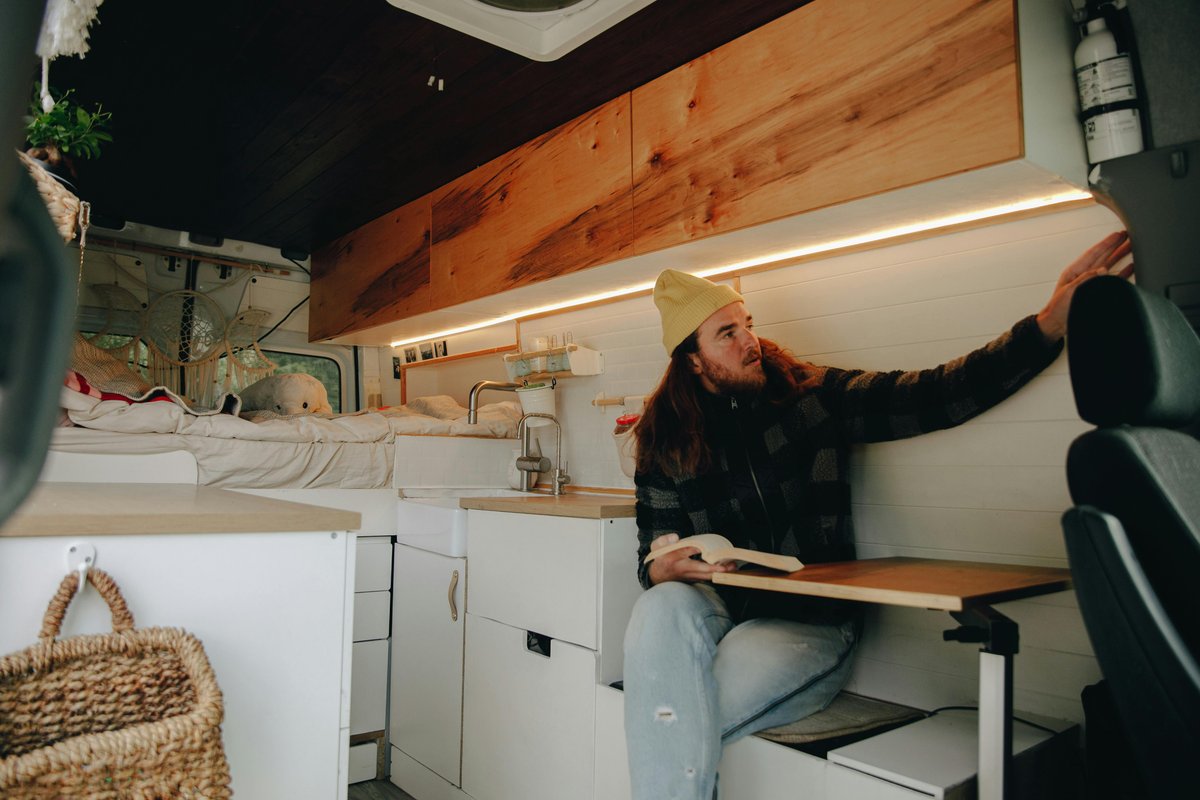
The single best investment in any RV is organization, not gear. A well-organized 24-foot trailer feels roomier than a cluttered 32-footer, and the supplies cost almost nothing.
Dollar-store organization wins:
- Tension rods under the sink to hang spray bottles
- Shower caddies mounted inside cabinet doors for spice storage
- Small stacking bins from Dollar Tree for pantry items
- Command hooks everywhere (seriously, buy 20 packs)
- Bungee cords across open shelving to prevent slide-outs during travel
- Magnetic spice tins on the side of the fridge or range hood
Walmart and Amazon upgrades worth the money:
- Stackable clear bins from the Sterilite line ($3–$6 each) so you can see contents without opening
- A hanging shoe organizer for the bedroom closet door (stores toiletries, chargers, flashlights, and first aid supplies)
- Adjustable shelf risers for cabinets to double your vertical storage
- Non-slip drawer liners. These cost $4 for a roll and prevent everything from becoming a projectile when you hit a speed bump.
If you're setting up at a resort-style park like The Ridge Outdoor Resort in Tennessee, you'll have more storage options since many premium sites include outdoor storage boxes or deck areas. But if you're moving between parks frequently, internal organization is everything.
A collapsible dish rack, collapsible colander, and nesting mixing bowls save more space than you'd think. These items compress to almost nothing and typically run $8–$15 each on Amazon.

What Bedding and Linens Actually Work in an RV?
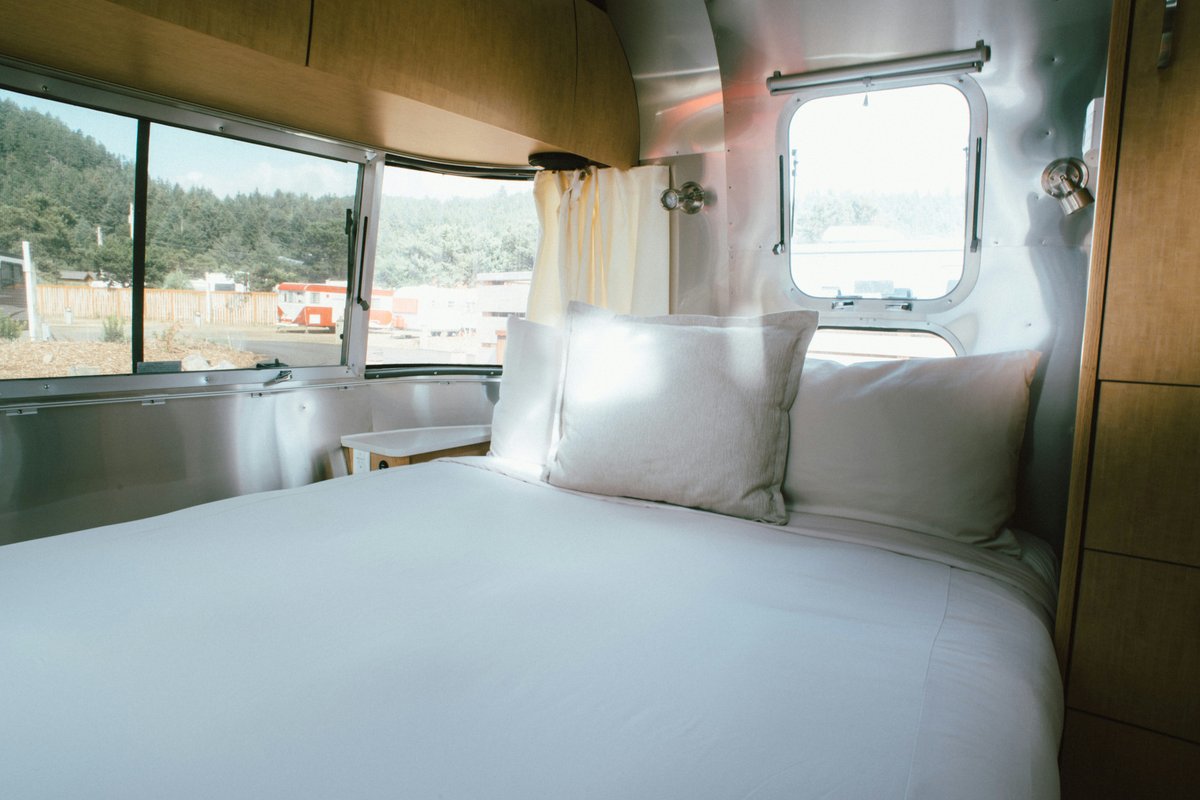
Standard household bedding rarely fits RV mattresses correctly. RV "queen" beds are often shorter (60x75 instead of 60x80), and bunk mattresses come in oddball dimensions that no big-box retailer stocks on shelves.
Before you buy anything, measure your mattress. Write down the length, width, and depth. Then shop accordingly.
Budget bedding strategy:
- Use fitted sheets one size up and tuck the excess under the mattress. A standard queen fitted sheet often works on a short queen with creative tucking.
- Walmart's Mainstays microfiber sheet sets ($12–$18) hold up for a full season and wash well.
- Skip the top sheet entirely and use a duvet cover that's easy to wash. RV laundry capacity is limited, and simpler bedding means fewer loads.
Worthwhile bedding upgrades:
- A 2-inch memory foam mattress topper. RV mattresses are notoriously thin and uncomfortable. A $40–$60 topper from Amazon transforms the sleeping experience. Look for gel-infused foam if you camp in warm climates, like the Texas Hill Country around Jellystone Park™ Hill Country.
- Zippered pillow protectors to guard against moisture and dust. RVs can develop condensation issues, especially in humid regions.
- A lightweight down-alternative comforter instead of heavy blankets. Easier to wash, packs smaller, and dries faster.
Towels and bath linens:
Buy quick-dry travel towels or thin Turkish cotton towels instead of fluffy bath sheets. Full-size bath towels take forever to dry in an RV bathroom with limited ventilation, and they hog washing machine capacity. A set of four Turkish cotton towels runs about $25 on Amazon and dries in half the time.
Which RV Supplies Are Actually Worth Paying Full Price For?
This is where I see new RV owners make costly mistakes in both directions. Some things should never be bought cheap because failure means damage, danger, or a ruined trip.
Always buy quality:
- Surge protector (30-amp or 50-amp depending on your rig). A quality portable surge protector with diagnostic lights costs $90–$150 and protects thousands of dollars in appliances. Campground electrical pedestals can spike, and a fried AC unit or refrigerator costs far more than the protector.
- Sewer hose kit. A cheap sewer hose will split at the worst possible moment. Spend $30–$40 on a quality kit with bayonet fittings and a clear elbow adapter.
- Water pressure regulator. Campground water pressure varies from a trickle to a firehose. A $10–$15 brass regulator prevents burst lines inside your walls.
- Leveling blocks. Cheap plastic blocks crack and crumble. Lynx Levelers or comparable interlocking systems last for years and cost around $30–$40 for a full set.
- First aid kit. Build one or buy a quality pre-made kit. Don't rely on a $5 kit with six bandages and an aspirin packet.
When we set up for a two-week stay at Stoney Creek RV Resort in Wisconsin last fall, the surge protector caught a voltage drop on our first night that would have damaged our converter. That $120 device paid for itself immediately.
Surprisingly fine to buy cheap:
- Outdoor rugs and mats (swap them out each season for $15–$20)
- Basic hand tools for minor repairs
- LED string lights for your awning
- Folding camp chairs (unless you camp 50+ nights a year)
- Plastic storage tubs for under-bed or basement compartment use
Where Should You Shop for the Best Deals on RV Gear?
Not all budget shopping is created equal. Each store has a sweet spot.
Dollar General / Dollar Tree: Best for consumables, cleaning supplies, paper goods, small kitchen utensils, and basic storage bins. Don't buy anything load-bearing or electrical here.
Walmart: The Ozark Trail and Mainstays lines punch well above their price point for camping. Walmart is also the best brick-and-mortar option for RV-specific items like sewer hose kits, water filters, and leveling blocks in their automotive/outdoor section.
Amazon: Best for comparison shopping, reading reviews, and finding RV-specific items (short queen sheets, RV vent covers, compact appliances). Watch for Lightning Deals on camping gear, especially in early spring before peak season.
Thrift stores (Goodwill, Salvation Army, Habitat ReStore): Absolute goldmines for cast iron cookware, baking dishes, picture frames for decorating, storage baskets, and sometimes even camp chairs. I found a complete Corelle dinnerware set for $6 at a Goodwill near WillowTree RV Resort & Campground in South Carolina. Corelle is practically indestructible, lightweight, and microwave-safe.
Facebook Marketplace and Craigslist: Search "RV supplies" or "camper lot" and you'll find people selling entire outfitting kits after selling their rigs. This is consistently the cheapest way to get started if you're patient.
Step-by-Step: How to Stock Your RV From Scratch
Follow this sequence to avoid buying duplicates or forgetting critical items.
- Measure everything first. Mattress dimensions, cabinet depths, counter width, and refrigerator interior size. Write it down or take photos with a tape measure visible.
- Make a master checklist. Divide it into Kitchen, Bedroom, Bathroom, Outdoor, Safety, and Electrical. Check off what you already own at home that can be moved to the RV.
- Shop your own house. Duplicate pots, extra towels, those sheets you never use, the coffee maker you replaced. Move them to the RV before buying anything.
- Hit thrift stores first. Spend one Saturday morning checking two or three locations. Prioritize cookware, dishes, and storage containers.
- Do one focused Walmart or Target run. Buy the Ozark Trail or Mainstays items on your list, plus cleaning supplies, a first aid kit, and bedding basics.
- Order specialty RV items online. Surge protector, water pressure regulator, RV-specific sewer hose, inline water filter, and any odd-sized bedding. Allow shipping time before your first trip.
- Do a test setup at home or at a nearby campground. Your first trip to a park like The Nugget RV Resort in Montana shouldn't be your first time figuring out where the can opener goes. Load the RV, organize it, cook one meal, and make adjustments before you hit the road.
- Keep a running "need" list after your first trip. You'll discover gaps quickly. The second trip is always smoother.
Recommended Gear for Budget RV Stocking
These product categories represent the essentials. Specific models and current pricing are available through our affiliate partners.
- Portable surge protector (30-amp or 50-amp): Protects your entire electrical system. Non-negotiable for any RV owner.
- Inline RV water filter: Reduces sediment, chlorine taste, and potential contaminants from campground water hookups.
- Water pressure regulator (brass): Prevents burst lines from high-pressure hookups.
- Memory foam mattress topper (2-inch, short queen): The single biggest comfort upgrade for under $60.
- Nesting cookware set: Saves cabinet space and replaces 4–5 individual pots and pans.
- Collapsible dish rack: Folds flat for travel, opens for use at your site.
- LED string lights: Low power draw, warm ambiance for your outdoor setup.
- Quick-dry travel towels or Turkish cotton towels: Dry faster, take up less storage space.
- Non-slip drawer and shelf liners: Prevents rattling and breakage during transit.
- Interlocking leveling blocks: Keeps your rig level on uneven sites, protecting your refrigerator and ensuring proper drainage.
For outdoor setup inspiration (awning lights, RV deck layouts, outdoor kitchen arrangements), Pinterest boards tagged "rv living" and "rv deck ideas" are genuinely useful. Many seasonal campers at resort parks build impressive outdoor living spaces on a surprisingly small budget.
Frequently Asked Questions
How much should I budget to stock a camper for the first time?
Plan for $300–$600 to cover kitchen, bedroom, bathroom, outdoor, and safety essentials at a comfortable mid-range quality level. You can trim that to under $200 by shopping thrift stores aggressively and using household items you already own.
Can I use regular household sheets in an RV?
Sometimes. Measure your RV mattress before buying. Many RV "queen" beds are shorter than standard residential queens (75 inches vs. 80 inches). Standard fitted sheets may work with extra tucking, but dedicated RV or "short queen" sheets provide a better fit.
What is the one item I should never buy cheap for my RV?
A surge protector. A quality 30-amp or 50-amp portable surge protector with diagnostic capability costs $90–$150 and protects your AC unit, refrigerator, converter, and every other electrical component from campground power irregularities.
Is Dollar General good for RV supplies?
Yes, for specific categories. Dollar General excels at cleaning supplies, paper goods, small kitchen utensils, and basic storage bins. Avoid buying anything electrical, load-bearing, or safety-related there.
What should I stock in my RV bathroom on a budget?
Focus on quick-dry towels (Turkish cotton or microfiber), a shower caddy that hangs from the shower head, travel-size toiletries to save space, RV-safe toilet paper, and a small squeegee to manage condensation. Total cost: $20–$40.
Do I need to buy RV-specific toilet paper?
Most single-ply and rapid-dissolve toilet papers work fine in RV black tanks. You can test any brand by placing a few sheets in a jar of water and shaking it. If it breaks apart within 10 seconds, it's safe for your RV. This test saves you from paying premium prices for "RV-specific" branding.
Have your own budget stocking tips or a favorite thrift-store find? Share them with the AllCampsAndParks community. Your first trip shouldn't break the bank, and it doesn't have to.