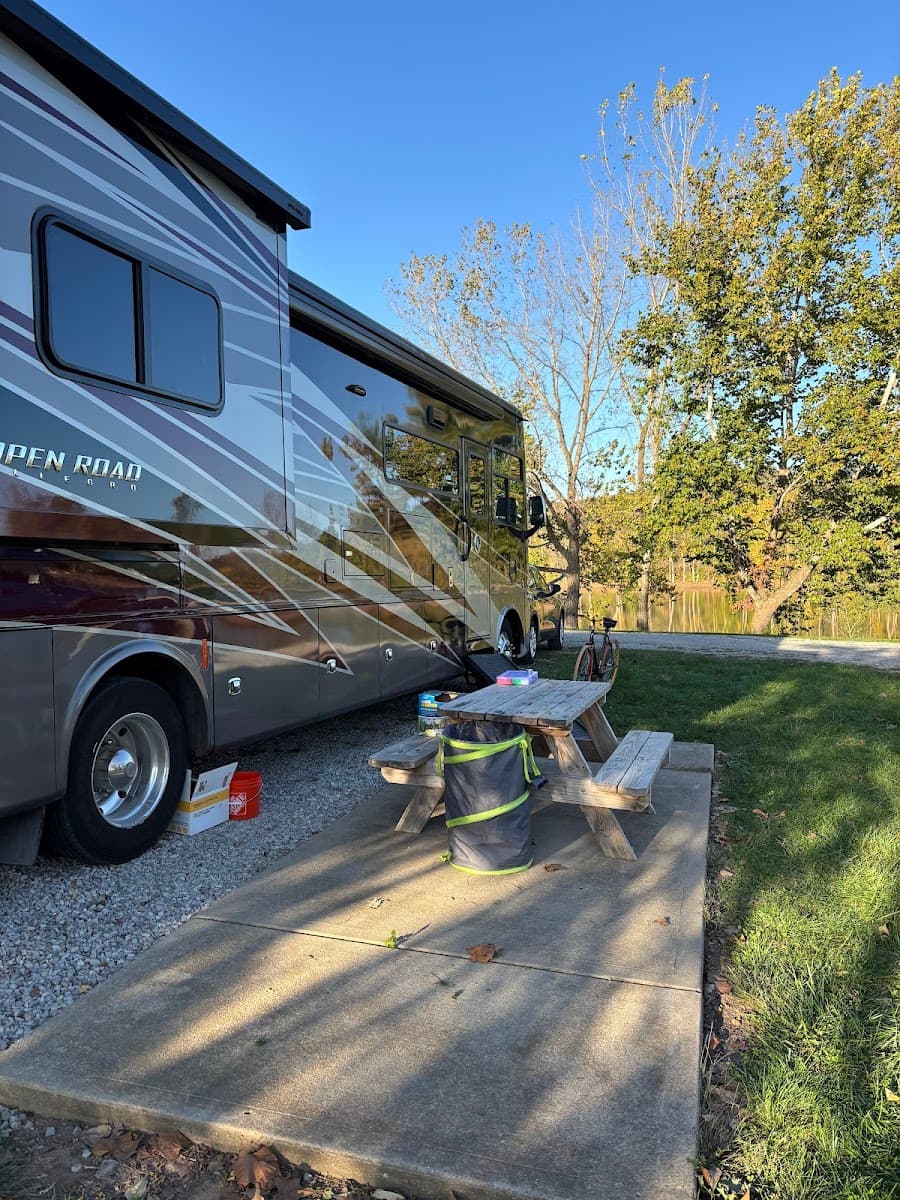
The number one question people ask before ditching their apartment for a converted Sprinter or Class C motorhome is simple: "But how will you make money?" It's a fair question. Rent disappears, sure, but fuel, campground fees, insurance, food, and vehicle maintenance don't pay for themselves.
The truth is that full-time nomads cobble together income from multiple streams. Some earn more than they did in traditional housing. Others scrape by. This article breaks down the real numbers, the most common income strategies, and how to set yourself up to earn while rolling down the highway.
How Much Do Full-Time Van Lifers Actually Earn?
Most full-time van lifers and RVers earn between $1,500 and $6,000 per month, with a significant chunk landing in the $2,500 to $4,000 range. That's not a guess. It tracks closely with surveys from nomad communities and financial breakdowns shared publicly by creators and remote workers.
The gap between low and high earners usually comes down to one factor: whether someone brought a portable career with them or is building one from scratch on the road.
| Income Source | Typical Monthly Range | Skill Barrier | Reliability |
|---|---|---|---|
| Remote W-2 employment | $3,000, $7,000+ | Medium, High | Very stable |
| Freelance writing/design/dev | $1,500, $6,000 | Medium, High | Moderate |
| Content creation (YouTube, blog) | $200, $5,000+ | Medium | Variable |
| Workamping | $0, $1,500 (+ free site) | Low | Seasonal |
| Seasonal employment | $1,200, $3,000 | Low | Seasonal |
| Passive income (investments, digital products) | $100, $3,000+ | High upfront | Stable once built |
| Gig work (DoorDash, Instacart) | $500, $2,000 | Low | Available in most areas |
Source: Nomad Income Survey 2025, published by The Dyrt community data
Most successful nomads rely on two or three of these streams at once. That redundancy matters when your "office" is parked in a campground and your Wi-Fi depends on a cell signal.

What Remote Jobs Work Best From a Van or RV?
Remote W-2 jobs and freelance contracts remain the most reliable way to fund life on the road. If you already work in tech, marketing, customer service, accounting, or writing, the transition to nomadic remote work is mostly a connectivity problem, not an income problem.
The best remote roles for van lifers share a few traits:
- Asynchronous communication is the norm (Slack over Zoom calls)
- Deadlines are flexible within a reasonable window
- Output matters more than hours logged
- The employer already supports distributed teams
Software developers, UX designers, copywriters, bookkeepers, virtual assistants, and customer support reps all thrive on the road. Teaching English online (companies like Cambly and Preply) works too, though the hourly rate is lower.
The hard part is connectivity. A dual-SIM cellular router (like the Pepwave MAX BR1 or a simple hotspot from T-Mobile and Verizon combined) is non-negotiable for anyone who needs to hit deadlines. Parks with strong Wi-Fi help, but never count on campground internet as your only option.
Cherry Hill Park in College Park, Maryland, is a favorite among remote-working nomads. Its proximity to the D.C. metro area means solid cell coverage and reliable park Wi-Fi, plus it supports longer stays for those who need a stable base while finishing a big project.
If you're setting up camp in Montana, Jim & Mary's RV Park in Missoula puts you in a college town with excellent coffee shops, public library Wi-Fi as a backup, and a community that's friendly to longer stays. Missoula's cell coverage from major carriers is strong, which matters when you're on a video call with a client.
Quick tips for remote work on the road:
- Always have a backup internet method (phone tethering, campground Wi-Fi, or a nearby library)
- Invest in a quality cell signal booster for your rig
- Communicate your travel schedule to your employer or clients upfront
- Build a buffer of completed work before travel days
- Know your time zone commitments and plan your route accordingly
Can You Really Make Money as a Content Creator on the Road?
Yes, but not quickly, and not without real effort. The romanticized version of van life content creation (post pretty sunset photos, get paid) is mostly dead. Audiences have matured, algorithms have shifted, and the market is saturated with "van tour" videos.
Creators who earn meaningful income in this space typically specialize. They don't just document "van life." They teach something specific: solar system installs, budget travel routes, campground reviews, cooking in small spaces, or managing finances on the road.
The realistic content creation income timeline:
- Months 1, 6: You're investing time, not earning. Building an audience, learning editing, finding your voice.
- Months 6, 12: Small trickles. Maybe $100, $500/month from YouTube ad revenue or affiliate links if you're consistent.
- Year 1, 2: If you've posted weekly and found a niche, $1,000, $3,000/month becomes possible through a mix of ad revenue, sponsorships, and digital products.
- Year 2+: Top creators in the nomad space earn $5,000, $15,000/month, but they treat it like a full-time job because it is one.
The platforms that pay best right now for nomad creators are YouTube (ad revenue), email newsletters with paid sponsorships, and digital courses or ebooks. Instagram and TikTok drive awareness but convert to income poorly on their own.
One underrated strategy: reviewing campgrounds and RV parks. That content has genuine search demand, and parks sometimes offer discounted or free stays in exchange for honest coverage. If you're already staying at a place like The Ridge Outdoor Resort in Sevierville, Tennessee (which is legitimately impressive with its mountain views and resort-level amenities), writing a detailed review or filming a walkthrough serves both your audience and your camping budget.
What Is Workamping and How Much Does It Pay?
Workamping is the practice of working at a campground, RV park, or resort in exchange for a free or discounted campsite, often with a small hourly wage on top. It's one of the oldest income strategies in the full-time RV community and it's still going strong.
Typical workamping arrangements look like this:
- 10, 20 hours per week of work (reception desk, groundskeeping, activity coordination, maintenance)
- Free full-hookup site included (worth $500, $1,200/month depending on location)
- Hourly pay of $10, $15/hour for hours worked, though some positions are site-only with no additional pay
- Seasonal commitments of 2, 6 months
The math works out surprisingly well. If you're getting a free $800/month campsite plus $1,000 in wages for part-time hours, that's $1,800/month in effective compensation while leaving you half your week free for other income streams.
Popular workamping employers include KOA campgrounds, Thousand Trails properties, state and national parks (through concessionaires), and Amazon's CamperForce program during peak warehouse season.
Parks in tourist-heavy areas near national parks tend to have the most workamping openings. Yellowstone Grizzly RV Park in West Yellowstone, Montana, sits right at the starting point for Yellowstone National Park, and the surrounding area hires hundreds of seasonal workers (including workampers) every summer. The demand for help in starting point forwns is consistent and the tips from tourism-related side gigs add up.
Where to find workamping jobs:
- Workamper News (the original job board for this niche)
- CoolWorks.com
- HipCamp and Harvest Hosts host networks
- Direct outreach to campgrounds you'd like to stay at
- Facebook groups like "Workamping and Camp Hosting Jobs"
One honest note: workamping isn't for everyone. You're trading time and flexibility for free rent. If your remote income already covers your campsite costs comfortably, workamping might feel like a step backward. But for nomads just starting out or those who want community and structure, it's a solid play.
What Seasonal and Gig Jobs Keep Nomads Afloat?
Seasonal W-2 jobs and gig economy work fill the gaps for many nomads, especially those without remote careers. The key is matching your travel route to where the jobs are.
Seasonal job calendar for nomads:
- Spring (March, May): Campground setup crews, farm work, national park concessions hiring
- Summer (June, August): Tourism jobs in mountain and lake towns, campground hosting, outdoor recreation guiding
- Fall (September, November): Harvest work (sugar beets in North Dakota, apples in Washington), Amazon CamperForce, Halloween attractions
- Winter (December, February): Ski resort work, snowbird-area retail in the South, holiday warehouse surges
Gig apps provide immediate income almost anywhere with a population center. DoorDash, Instacart, Amazon Flex, and Uber are the most common choices. The hourly rate varies wildly by market, but $15, $25/hour before expenses is typical.
A strategy that works well: park at an affordable long-term site and gig in a nearby town for a few weeks to rebuild your savings. Castle Gate RV Park in Helper, Utah, keeps rates reasonable and puts you within driving distance of Price and other towns along the I-70 corridor. It's the kind of quiet, low-cost base camp where you can hunker down and focus on earning for a stretch.
For nomads heading to the Southeast, WillowTree RV Resort & Campground near Myrtle Beach, South Carolina, is well-positioned for seasonal tourism work during warmer months. The Myrtle Beach area hires aggressively for summer, and the campground's location means you're close to the action without paying beachfront rent.
How Do Van Lifers Build Passive Income?
Passive income takes significant upfront work but pays off once you're on the road. The most common passive income streams among nomads are digital products, investments, and rental income from property they kept when they hit the road.
Realistic passive income sources for nomads:
- Rental property: Many full-timers rent out their former home or a small investment property. Net rental income of $500, $1,500/month after mortgage and management fees is common.
- Dividend investing: A portfolio of $100,000 in dividend-focused index funds generates roughly $250, $350/month. Most nomads are building toward this rather than living on it.
- Digital products: Ebooks, Notion templates, Lightroom presets, campground guides, and online courses related to van life or remote work. Income ranges from $50 to $3,000+/month depending on audience size.
- Print-on-demand and Etsy shops: T-shirts, stickers, and camping-themed merchandise. Low margins but low effort once set up.
- Affiliate marketing: Recommending gear, tools, and services through blog posts or YouTube descriptions. Most nomad affiliates earn $100, $1,000/month.
The honest take: truly passive income is rare. "Passive" usually means "less active." Rental properties need a property manager (and occasional headaches). Digital products need marketing. Affiliate content needs traffic. But compared to trading hours for dollars, these streams give you flexibility that fits the nomadic lifestyle.
Recommended Gear for Earning on the Road
Your ability to earn money while traveling depends heavily on staying connected and powered up. Cutting corners on work-critical gear costs you more in missed deadlines and lost income than the upfront investment.
Connectivity essentials:
- A reliable cellular hotspot (or two, on different carriers) for redundant internet
- A cell signal booster rated for RV/van use (weBoost or SureCall are the go-to brands)
- A quality laptop with enough battery life for full work days (minimum 8 hours)
Power essentials:
- A portable power station (like the EcoFlow Delta series or Jackery Explorer 1000) for off-grid work sessions
- At least 200W of rooftop solar to keep batteries topped up during boondocking stretches
- A reliable 30-amp surge protector to protect your electronics at RV parks with sketchy electrical hookups
Workspace comfort:
- A compact folding desk or lap desk for ergonomic typing
- Noise-canceling headphones for video calls in campgrounds (wind and generators are real)
- A portable monitor for dual-screen setups if your work demands it
Organization tools:
- A fireproof document bag for tax paperwork, business licenses, and insurance documents
- Cloud backup for all work files (hard drives fail; Backblaze or Google Drive don't care if you're in Utah or Maine)
Step-by-Step: How to Set Up Your Van Life Income Before Hitting the Road
Planning your income strategy before you leave is dramatically easier than scrambling after your first month of campground fees.
Audit your current skills. List every marketable skill you have. Writing, coding, teaching, bookkeeping, graphic design, photography, customer service, project management. Be honest and thorough.
Choose your primary income stream. Pick the one source most likely to cover at least 70% of your monthly expenses. For most people, this is remote work or freelancing.
Build a financial cushion. Save 3, 6 months of living expenses before leaving. Your van life budget will likely run $1,500, $3,500/month depending on how you travel.
Test your connectivity setup. Before going full-time, spend a long weekend working from your rig at a campground. Identify signal dead zones and internet reliability issues now.
Set up a secondary income stream. Start a blog, open a gig app account, or list yourself on freelance platforms. This runs in the background while your primary income does the heavy lifting.
Establish your domicile and business structure. Pick a mail-forwarding state (Texas, South Dakota, and Florida are the most popular for nomads due to no state income tax). If freelancing, set up an LLC and a dedicated business bank account.
Plan your first 3 months of stops around income needs. Choose locations with reliable cell coverage, affordable long-term campground rates, and proximity to backup work opportunities. Don't start your nomad life in a remote canyon with no signal.
Track everything from day one. Use a simple spreadsheet or an app like YNAB to monitor income and expenses by category. Many nomads discover their actual costs differ wildly from their projections within the first 60 days.
Frequently Asked Questions
How much money do you need to start van life?
Most people need $5,000, $15,000 to get started if they already own a suitable vehicle. That covers a basic build-out or RV purchase, initial gear, and a small emergency fund. If you're buying a van or RV from scratch, budget $15,000, $50,000 total depending on the vehicle and how much work it needs.
Do van lifers pay taxes?
Yes. Full-time nomads are still responsible for federal income tax and potentially state income tax depending on their domicile state. Many nomads establish residency in states like Texas, South Dakota, or Florida to avoid state income tax. Self-employed nomads should make quarterly estimated tax payments to avoid penalties.
Is van life actually cheaper than renting an apartment?
For most people, yes. The average full-time van lifer or RVer spends $1,500, $3,000/month on all living expenses, including fuel, campground fees, food, insurance, and maintenance. That's significantly less than the average U.S. apartment rent plus utilities plus commuting costs. The savings increase dramatically if you boondock frequently.
Can you work a regular 9-to-5 job while living in a van?
Absolutely, if your job is remote and your employer allows it. The challenge is maintaining reliable internet and being available during set hours across time zones. Many van lifers with W-2 remote jobs stay in one region for weeks at a time rather than moving daily, which makes schedule consistency much easier.
What is the hardest part of earning money on the road?
Internet reliability. Almost every other challenge (finding clients, managing time zones, staying motivated) has straightforward solutions. But when your hotspot drops during a client presentation or a deadline day, the stress is real. Invest in redundant connectivity and always have a backup plan, even if that plan is driving to the nearest public library.
How do workampers find jobs at specific campgrounds?
The most direct approach is contacting campgrounds you're interested in and asking about workamping opportunities. Many parks post openings on Workamper News, CoolWorks, or their own websites. Timing matters: apply 3, 6 months ahead for summer positions and 1, 3 months ahead for shoulder seasons.
This article is based on real-world data from nomad communities, publicly shared financial breakdowns from full-time travelers, and firsthand reporting. Income figures represent ranges, not guarantees. Your results will depend on your skills, work ethic, and willingness to adapt.