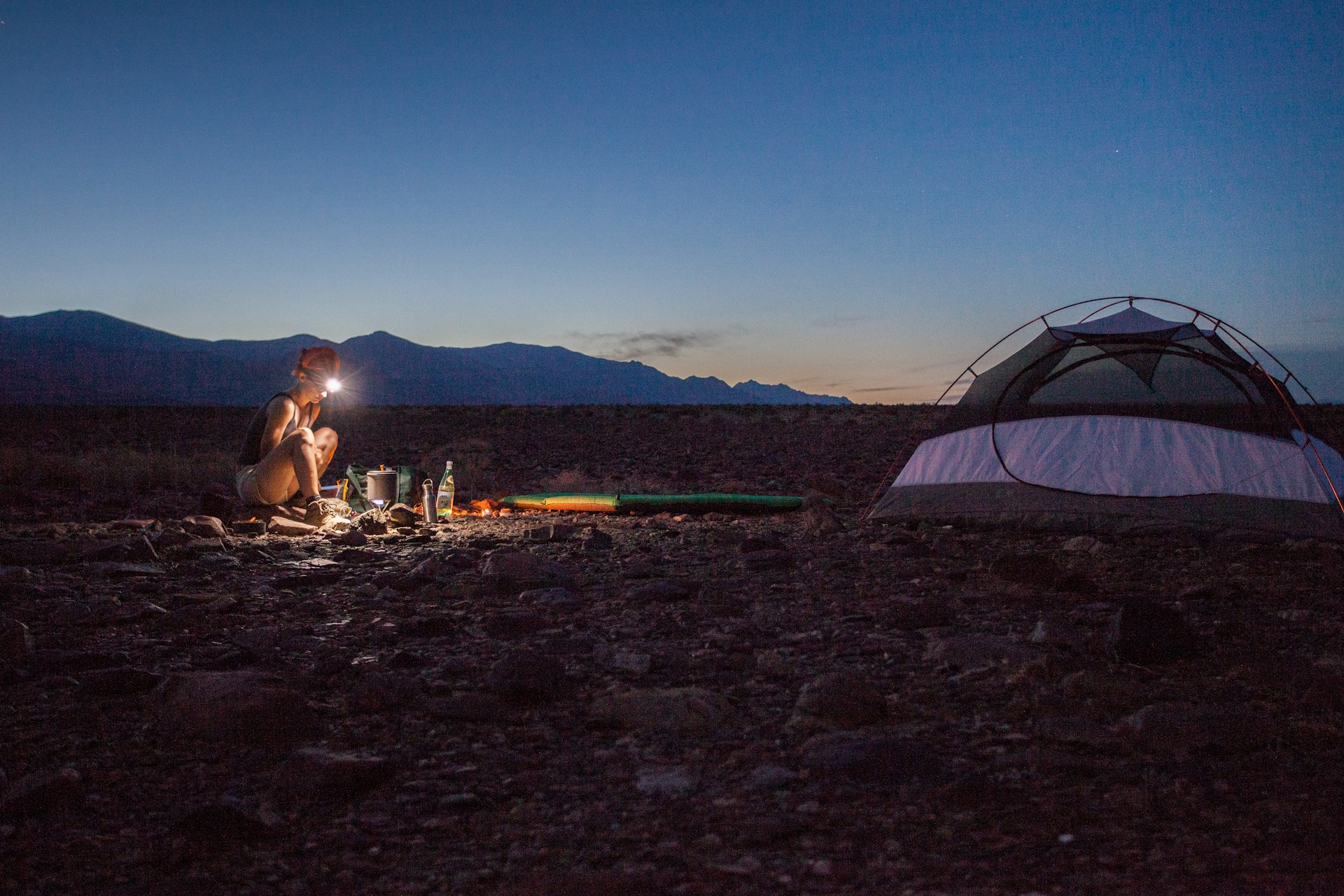
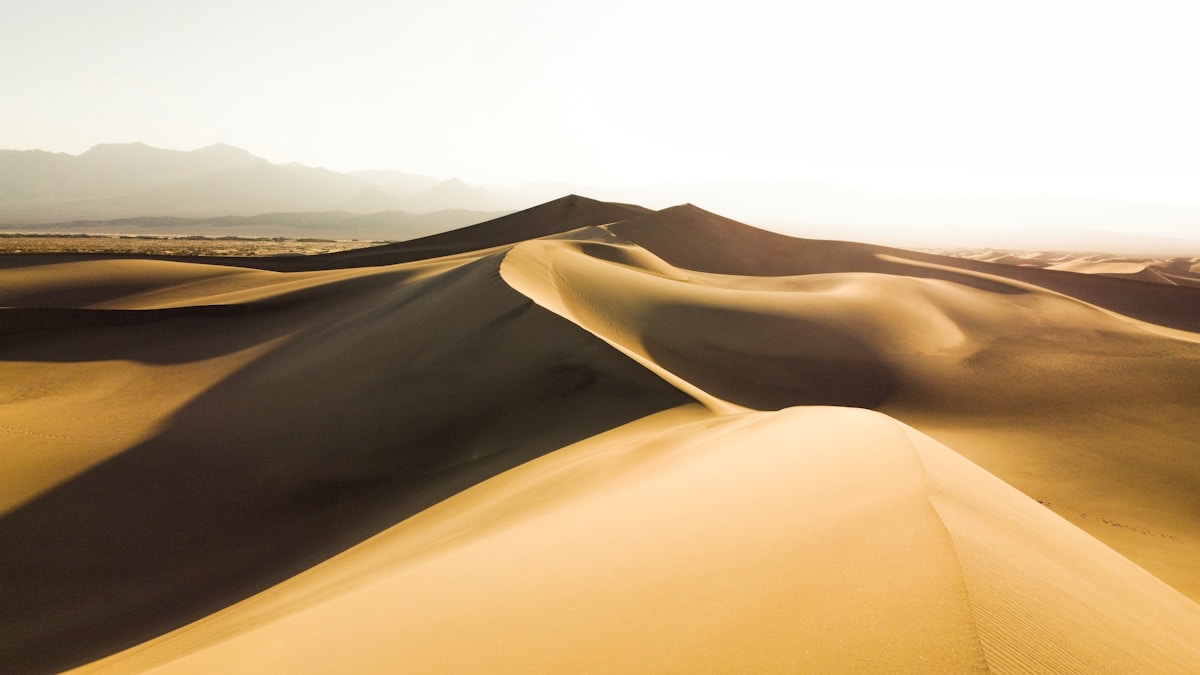
Death Valley is 3.4 million acres of salt flats, sand dunes, slot canyons, and volcanic craters. It's also the hottest place on Earth. That combination makes it one of the most rewarding backcountry camping destinations in the U.S., but only if you plan correctly.
This guide covers the specific rules, gear, timing, and water math you need for your first dispersed camping trip in Death Valley National Park. Skip the guesswork and go prepared.
Do You Need a Permit for Backcountry Camping in Death Valley?
Yes, you need a free voluntary backcountry registration for any overnight stay outside developed campgrounds. Pick up a form at the Furnace Creek Visitor Center or any ranger station, fill it out, and leave one copy on your dashboard while carrying the other with you.
The registration is not a reservation. It's a safety measure so rangers know where to look if you don't return. There is no quota system for backcountry camping in Death Valley, and you won't be turned away.
Core dispersed camping rules:
- Camp at least 2 miles from any paved road, developed area, or day-use area
- Camp at least 200 feet from any water source (springs are rare and critical for wildlife)
- No camping within 100 yards of any historic or cultural site
- Maximum stay is 30 days per calendar year
- Campfires are prohibited in the backcountry (stoves are allowed)
- Pack out all waste, including human waste if above the valley floor
There's an important distinction most first-timers miss. Many popular backcountry roads have designated "roadside camping" areas where you can pull off and camp right next to your vehicle without the 2-mile rule. These spots are marked on the official park map with a tent icon. They're the easiest entry point for dispersed camping in Death Valley because you keep your vehicle close and don't need to hike in with all your gear.
When Is It Safe to Camp in Death Valley?
The safe camping window runs from late October through early April, with November through February being the most comfortable months. Summer camping at lower elevations is genuinely dangerous and strongly discouraged by the National Park Service.
Here's what temperatures actually look like at Furnace Creek (the valley floor, elevation -190 feet):
| Month | Avg High (°F) | Avg Low (°F) | Camping Suitability |
|---|---|---|---|
| January | 67 | 40 | Prime season |
| February | 73 | 46 | Prime season |
| March | 82 | 54 | Good (warm days) |
| April | 90 | 62 | Marginal (hot by midday) |
| May | 100 | 72 | Not recommended |
| June | 110 | 81 | Dangerous |
| July | 116 | 88 | Dangerous |
| August | 114 | 85 | Dangerous |
| September | 106 | 75 | Dangerous |
| October | 92 | 62 | Late month OK |
| November | 77 | 48 | Prime season |
| December | 65 | 38 | Prime season (cold nights) |
Source: NOAA Western Regional Climate Center, Death Valley Station
Higher elevation camping at Wildrose, Thorndike, or Mahogany Flat extends your season slightly because temperatures drop roughly 3 to 5 degrees per 1,000 feet of elevation gain. Mahogany Flat sits at 8,133 feet and stays significantly cooler than the valley floor, but roads to those campgrounds close in winter due to snow.
Timing tips:
- Wildflower season typically peaks in February and March following wet winters
- Holiday weekends (Thanksgiving, Presidents' Day) fill developed campgrounds fast
- Weekday visits in January give you near-solitude at most backcountry sites
- Wind is strongest in spring, so stake your tent well and bring dust protection for gear
How Much Water Should You Bring for Desert Camping?
Plan on a minimum of one gallon per person per day, and realistically bring 1.5 gallons per person per day for any trip longer than one night. There is no reliable water in the Death Valley backcountry, period.
That math gets heavy fast. One gallon weighs 8.34 pounds, so a three-day trip for two people at 1.5 gallons per day means hauling 75 pounds of water. This is why most backcountry campers in Death Valley use a vehicle-supported approach rather than long backpacking routes.
Water planning checklist:
- Carry all water you need from outside the park (Pahrump, NV or Lone Pine, CA are the last reliable fill-up towns)
- Bring at least 2 gallons of extra vehicle water for radiator emergencies
- Store water in multiple containers (if one leaks, you aren't stranded)
- A quality insulated water jug keeps drinking water cooler through the day
- Bring electrolyte packets or tablets since plain water won't fully replace what you sweat out
- Never count on park water spigots at developed campgrounds as your backcountry supply. They occasionally go offline.
Dehydration in desert conditions doesn't always feel like thirst. Headache, dizziness, dark urine, and irritability are early signs. If you notice these, stop hiking, find shade, and drink immediately.
What Vehicle Do You Need for Death Valley Backcountry Roads?
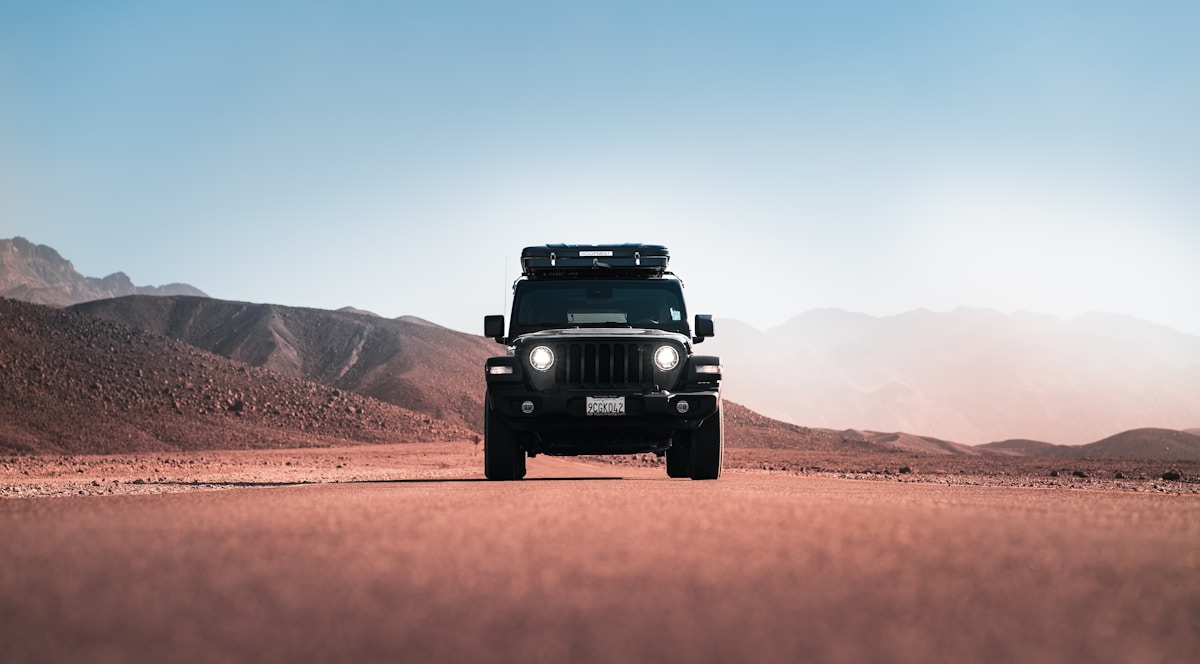
Most backcountry roads in Death Valley require high-clearance vehicles, and many require four-wheel drive. A standard sedan will get you to the developed campgrounds and major viewpoints, but not to the best dispersed camping spots.
The park classifies its unpaved roads into categories. Understanding these will save you from getting stuck (or from destroying your oil pan on a rock).
Road types and requirements:
- Graded dirt roads (e.g., West Side Road, Emigrant Canyon): Most SUVs and trucks handle these. No 4WD needed, but ground clearance of 8+ inches helps.
- High-clearance roads (e.g., Titus Canyon one-way, Racetrack Valley Road): Require a truck or SUV with at least 8 to 10 inches of clearance. Racetrack Road is notoriously rough and eats tires.
- 4WD-only routes (e.g., Lippincott Road, Cottonball Basin, Echo Canyon): Serious off-road conditions. Low range, skid plates, and recovery gear are needed.
Tire damage is the single most common vehicle problem in Death Valley. Carry a full-size spare (not a donut), a quality tire plug kit, and a portable air compressor. Two spares is better if you're heading to remote areas like the Racetrack or Eureka Dunes.
Cell service is nonexistent across most of the park. A satellite communicator (like a Garmin inReach or ZOLEO) is not optional for backcountry trips. If your vehicle breaks down 40 miles from pavement, you need a way to call for help.
Before you leave pavement:
- Top off your fuel tank (the nearest gas is often 60+ miles away)
- Tell someone outside the park your route and expected return time
- Air down tires to 25 to 28 PSI on washboard roads (re-inflate before returning to pavement)
- Check road conditions at the visitor center since flash floods close roads without warning
Step-by-Step: Planning Your First Death Valley Backcountry Trip
Here's how to put it all together for a first backcountry outing that's challenging but not reckless.
- Pick your month. November through February for valley-floor camping. March for wildflowers and higher-elevation sites.
- Choose a roadside camping area for your first trip. Hole in the Wall, Warm Spring Canyon Road, and the Greenwater Valley Road corridor all have accessible sites that keep you near your vehicle.
- Check road conditions. Call the park at (760) 786-3200 or stop at the Furnace Creek Visitor Center. Roads change status frequently after rain.
- Stock up in the last supply town. Pahrump, NV (60 miles east) or Lone Pine, CA (65 miles west) for water, fuel, ice, and food. In-park stores at Furnace Creek and Stovepipe Wells carry limited supplies at premium prices.
- Register at the visitor center. Fill out the backcountry registration form. Ask rangers about current conditions at your intended campsite.
- Drive to your site before dark. Navigating unpaved desert roads at night is risky. Plan to arrive at least 90 minutes before sunset.
- Set up camp following Leave No Trace principles. Use existing disturbed areas when possible. No digging fire rings. No collecting rocks or artifacts.
- Pack everything out. This includes human waste bags if you're above the valley floor where burying is impractical due to rocky soil.
What Campgrounds Are Available Inside Death Valley?
Death Valley has nine developed campgrounds managed by the National Park Service, ranging from free primitive sites to reservable spots with flush toilets. If backcountry dispersed camping feels like too much for your first visit, these are a solid starting point.
| Campground | Elevation (ft) | Sites | Fee | Water | Reservable? |
|---|---|---|---|---|---|
| Furnace Creek | -190 | 136 | $22/night | Yes | Yes (Oct-Apr) |
| Sunset | -190 | 270 | $16/night | Yes | No |
| Texas Spring | Sea level | 92 | $16/night | Yes | No |
| Stovepipe Wells | Sea level | 190 | $14/night | Yes | No |
| Mesquite Spring | 1,800 | 30 | $14/night | Yes | No |
| Emigrant | 2,100 | 10 | Free | Yes | No |
| Wildrose | 4,100 | 23 | Free | Seasonal | No |
| Thorndike | 7,400 | 6 | Free | No | No |
| Mahogany Flat | 8,133 | 10 | Free | No | No |
Source: National Park Service, Death Valley Campground Information
Furnace Creek is the only campground that takes reservations through Recreation.gov during peak season. Every other campground is first-come, first-served. During holiday weekends, Furnace Creek and Texas Spring fill by early afternoon.
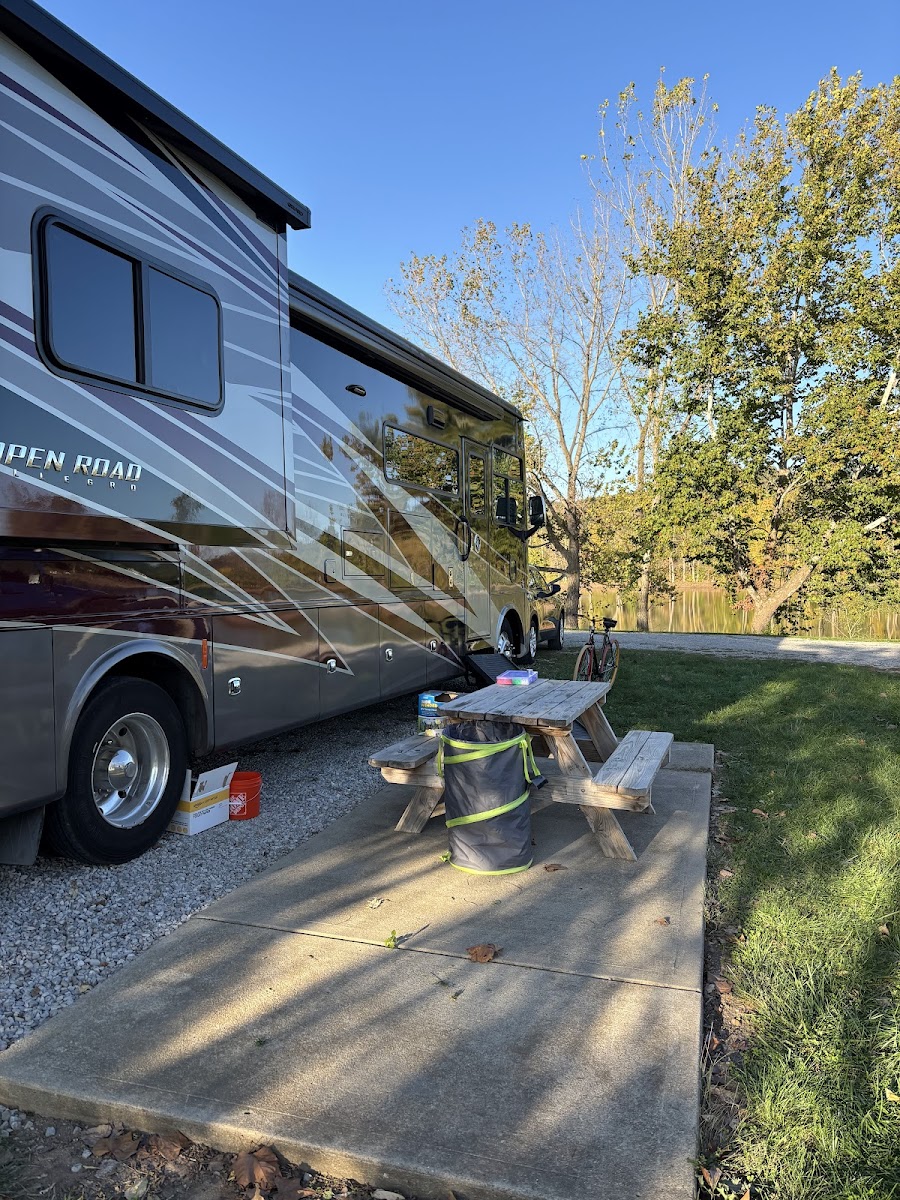
None of these campgrounds have hookups. RV campers can use the dump station at Furnace Creek and fill fresh water there, but you're dry camping at every NPS site in the park.
Where Can RV Campers Find Hookups Near Death Valley?
The closest full-hookup RV parks sit in Pahrump, Nevada (about 60 miles from Furnace Creek) and Beatty, Nevada (40 miles from the park's northeast entrance). Lone Pine, California, also has a few options on the western side.
For RV travelers planning a longer road trip through the West, the logistics work best when you stage at a full-service campground before and after your Death Valley stretch. Top off your fresh water, dump your tanks, charge your batteries, and then head into the park for a few days of dry camping.
If your route brings you through central California, Jellystone Park™ Tower Park near Lodi makes a comfortable staging point with full hookups before you drive east toward the park. Travelers coming from the Utah side often combine Death Valley with stops in the red rock country. Castle Gate RV Park in Helper, Utah, works well as a layover if you're connecting Death Valley with a broader Southwest loop. And if you're routing through southern Utah near Zion, Kanab RV Corral in Kanab gives you a full-service base before the long desert crossing.
RV-specific tips for Death Valley:
- Generator hours at NPS campgrounds are typically 7 a.m. to 7 p.m. (check current regulations at each campground)
- Furnace Creek and Stovepipe Wells accommodate big rigs, but sites at Texas Spring get tight above 30 feet
- Propane is available at Stovepipe Wells and Furnace Creek
- Road vibration on washboard dirt roads can shake loose RV cabinets and fittings. Secure everything before entering unpaved roads.
- A portable solar panel setup (100W minimum) extends your dry camping range significantly in a park that averages 300+ sunny days per year
Recommended Gear for Death Valley Backcountry Camping
Desert camping requires a different loadout than mountain or forest trips. Here's what matters most.
Shelter and sleep:
- A three-season tent with strong wind ratings (Death Valley wind gusts regularly hit 40+ mph)
- A sleeping bag rated to 20°F for winter valley-floor nights
- A ground tarp to protect your tent floor from sharp rocks and thorny debris
Navigation and communication:
- Paper maps of the park (the NPS map from the visitor center plus USGS topo maps for your route)
- A satellite messenger for emergencies
- A handheld GPS or downloaded offline maps on your phone
Vehicle recovery:
- Full-size spare tire (two if going deep)
- Tire plug kit and portable 12V air compressor
- Tow strap and basic tool kit
- Extra engine coolant and motor oil
Sun and heat protection:
- Wide-brim hat and UV-protective long sleeves
- Mineral sunscreen (SPF 50+)
- A lightweight shade tarp or canopy for campsite comfort during the day
Water and food:
- Rigid water containers (collapsible bags puncture more easily on desert terrain)
- A reliable camp stove since fires are banned in the backcountry
- High-calorie, low-prep foods that don't require excess water for cooking
Frequently Asked Questions
Is boondocking legal in Death Valley National Park?
Yes. Dispersed camping (boondocking) is allowed throughout most of the park's backcountry, provided you camp at least 2 miles from paved roads, developed areas, and water sources. Roadside camping is also permitted in specific designated areas along backcountry dirt roads. Register at the visitor center before heading out.
How long can you camp in Death Valley backcountry?
You can camp for up to 30 days per calendar year in the Death Valley backcountry. There's no single-trip length limit within that 30-day total. Most backcountry campers stay two to four nights.
Can you camp anywhere in Death Valley?
Not quite. Camping is prohibited within 2 miles of paved roads (unless at a designated roadside spot), near water sources, near historic structures, and in day-use-only areas. The park map identifies restricted zones. When in doubt, ask at the visitor center.
Is Death Valley safe for solo camping?
Solo backcountry camping is legal but carries higher risk due to the remoteness and extreme conditions. If you go solo, a satellite communicator is essential. File a detailed trip plan with someone outside the park, and stick to established roadside camping areas rather than deep backcountry routes on your first visit.
Do I need a park entrance pass?
Yes. Death Valley requires a $30 vehicle entrance fee valid for seven days, or you can use an America the Beautiful annual pass ($80). Fee stations are at the Furnace Creek and Stovepipe Wells entrance points, and passes are also available at the visitor center.
What should I do if my car breaks down in the backcountry?
Stay with your vehicle. Your car provides shade, is easier for searchers to spot than a person on foot, and may have stored water. Use your satellite communicator to call for help. If you don't have one, wait for other travelers to pass. Walking out in desert heat is how people die in Death Valley, and it happens more often than you'd think.