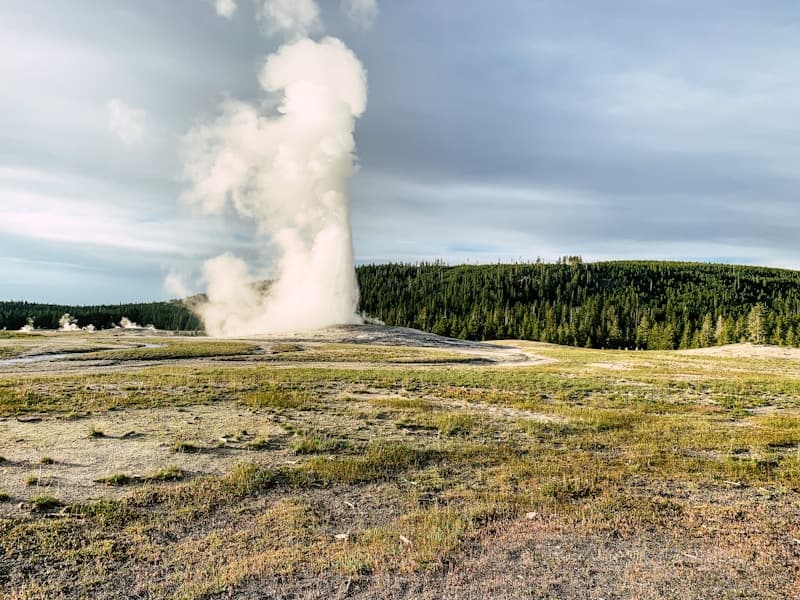
Camping Near Yellowstone National Park
Wyoming, Montana, Idaho | Established 1872
About Yellowstone National Park
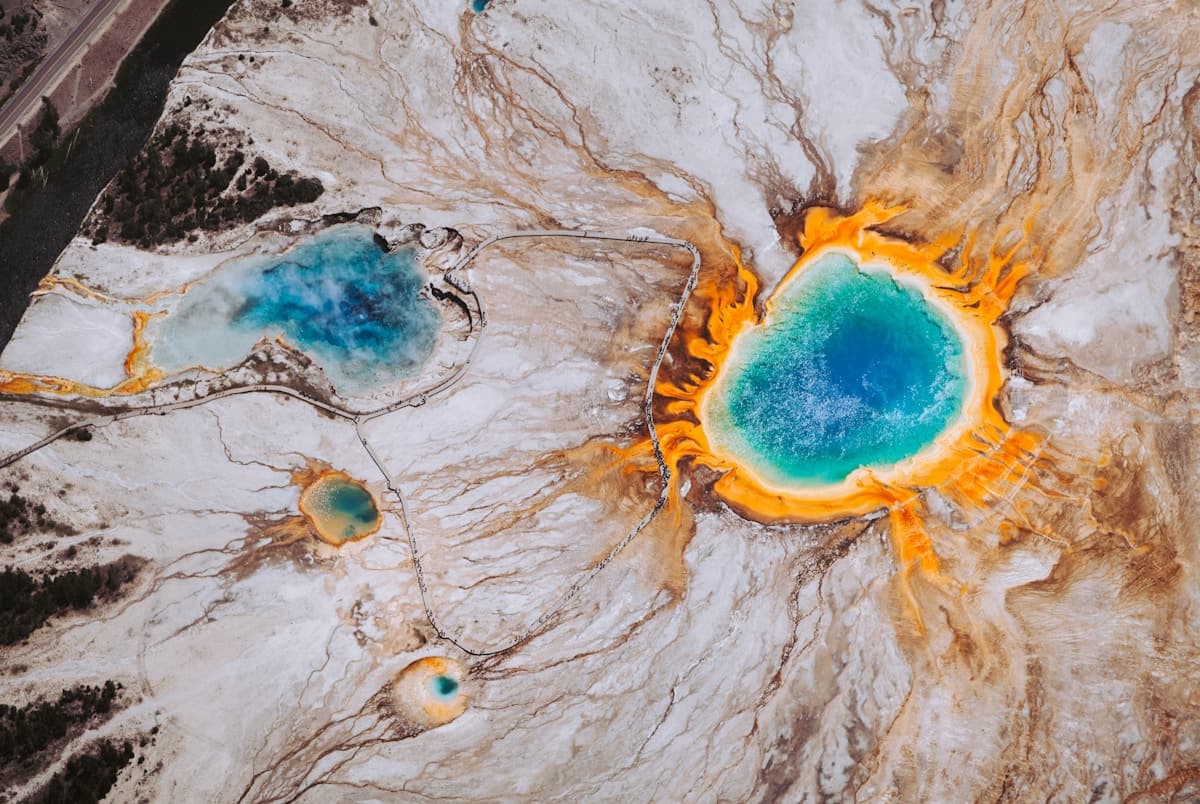
Yellowstone spans 2.2 million acres across Wyoming, Montana, and Idaho. It holds more than 500 active geysers, over half the world's total, along with the Grand Canyon of the Yellowstone, large herds of bison and elk, grizzly bears, wolves, and thousands of hydrothermal features.
The park operates 11 campgrounds with over 2,000 sites. Fishing Bridge RV Park is the only one with full hookups. Slough Creek and Tower Fall are smaller and quieter. Five campgrounds are run by Xanterra (the park concessioner) and six by the National Park Service. Gateway towns like West Yellowstone, Gardiner, Cooke City, Cody, and Jackson have dozens of private RV parks and campgrounds with full amenities.
Peak season runs June through August. Campground reservations open six months in advance and summer sites fill within minutes.
Camping Tips for Yellowstone
- Carry bear spray in a belt or chest holster, not inside your pack. It's sold and rented at park stores and gateway town outfitters.
- Reserve NPS campgrounds on Recreation.gov and concessioner campgrounds on yellowstonenationalparklodges.com. Both open six months out and sell out fast.
- Nighttime lows drop into the 30s°F even in midsummer. The park sits above 5,000 feet. Bring layers and a warm sleeping bag.
- Store all food, coolers, and anything scented in a hard-sided vehicle or bear box when not in use. Bears walk through every campground.
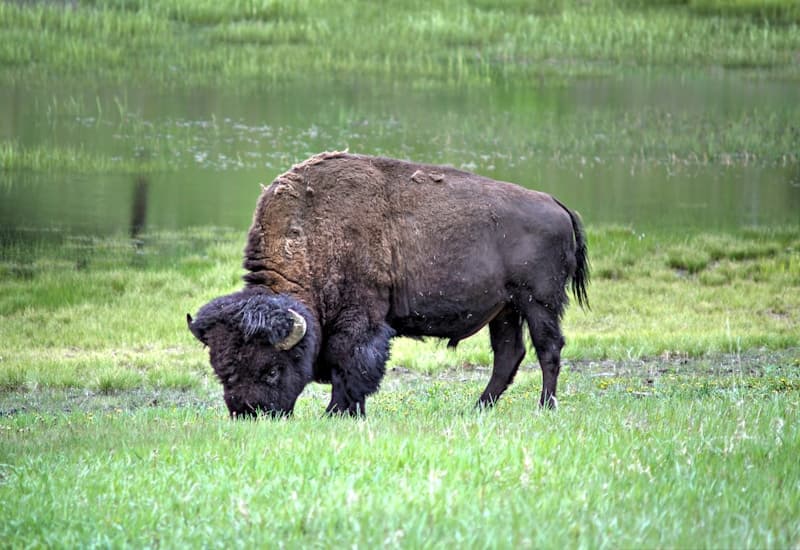
- Drive Lamar Valley at dawn or dusk for the best wildlife viewing. Bison, wolves, grizzlies, and elk are all common.
RV Parks & Campgrounds Near Yellowstone National Park

61.Soda Butte Campground
Soda Butte Campground is located in the Custer Gallatin National Forest. The campground offers opportunities for biking, climbing, fishing, hiking, horse riding, and hunting....
Show more
62.Mammoth Campground
Mammoth Campground is located in Yellowstone National Park. It offers a range of campsites, including RV sites and tent sites. The campground is situated near the north entrance...
Show more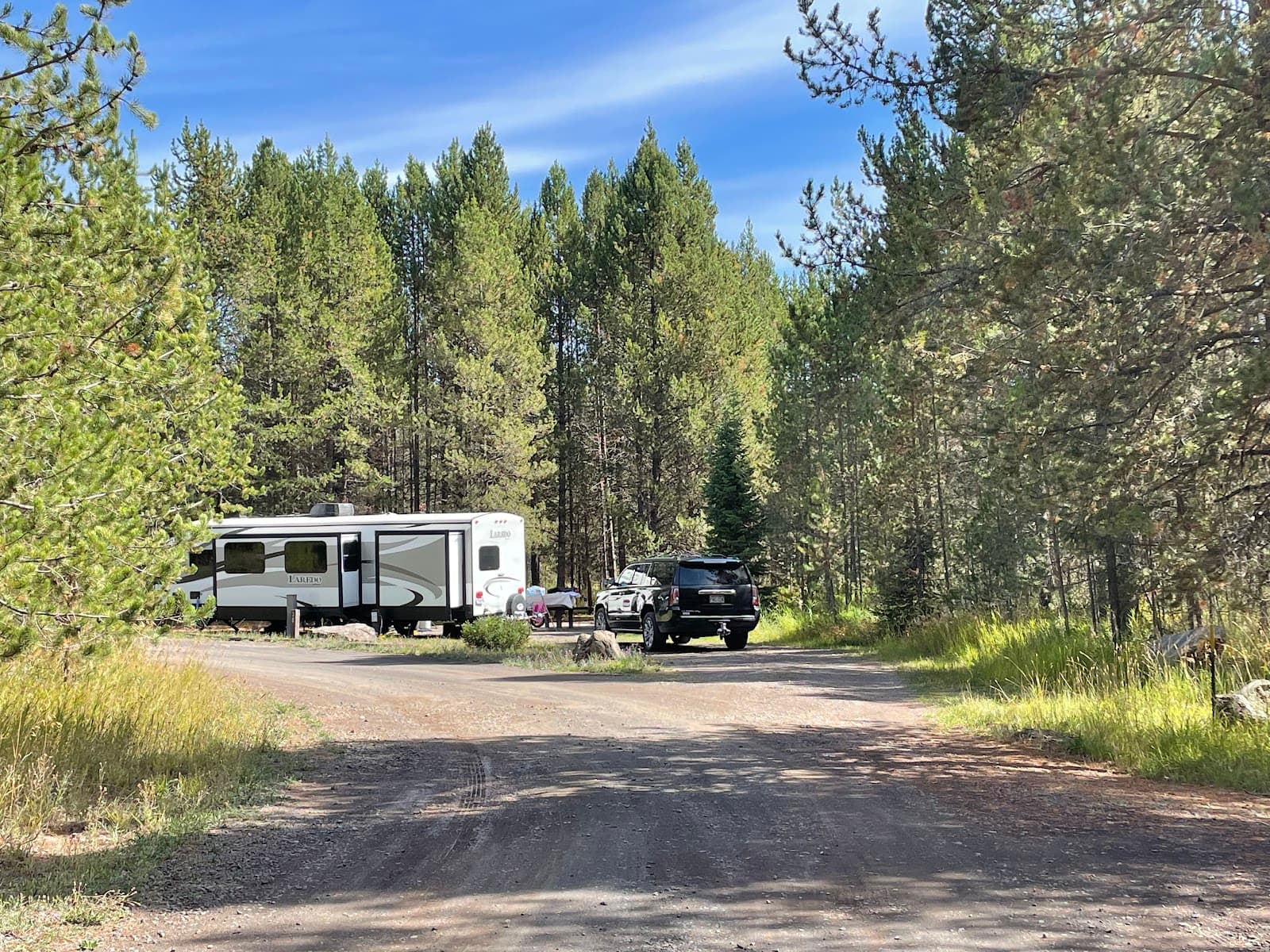
63.Buttermilk Campground
The Caribou-Targhee National Forest offers a vast landscape of diverse recreational opportunities, from rugged backcountry adventures to family-friendly campgrounds. Whether...
Show more
64.Cliff Point Campground
Located at the Headwaters of the Columbia River Basin, the continental divide surrounds the community of Butte, MT offering a variety of outdoor recreation opportunities. The...
Show more
65.Newton Creek Campground
The United States Congress designated the Absaroka-Beartooth Wilderness in 1978 and it now has a total of 943,648 acres. Spanning the Montana-Wyoming border on the Shoshone,...
Show more66.Teton Canyon Campground
Teton Canyon Campground is a newly-renovated facility located in scenic Teton Canyon at an elevation of approximately 6,500 feet, just 11 miles from Driggs, Idaho. Situated along...
Show more
67.Cherry Creek Campground
The Custer Gallatin National Forest offers a wide range of recreation opportunities, including biking, climbing, fishing, hiking, horse riding, hunting, off-highway vehicles,...
Show more68.Buffalo Campground
The Caribou-Targhee National Forest offers a vast landscape of diverse recreational opportunities, from rugged backcountry adventures to family-friendly campgrounds. Whether...
Show more69.Wapiti Campground
Wapiti Campground is located in the Shoshone National Forest. The campground is a popular base camp for many people enjoying the internationally acclaimed climbing areas in the...
Show more70.Big Springs Group Area - Island Park
Big Springs Group Area is a camping destination located in Island Park, offering a scenic outdoor experience for group gatherings. The area provides facilities designed to...
Show moreShowing 61–70 of 322 campgrounds within 50 miles
Frequently Asked Questions
How much does it cost to camp near Yellowstone?
NPS campgrounds (Indian Creek, Lewis Lake, Slough Creek, Tower Fall) cost $20/night. Mammoth is $25/night. Concessioner campgrounds (Bridge Bay, Madison, Canyon, Grant Village) run $38–$45/night. Fishing Bridge RV Park, the only full-hookup option, starts at $94/night. A $35/vehicle entrance pass is required separately.
All rates are per site, per night, plus applicable taxes. Showers are included at Canyon, Grant Village, and Fishing Bridge, two per site per night. At other campgrounds with shower access, expect to pay $5.45 plus tax. Firewood collection is prohibited in most areas; bundles are sold at campground stores. Private campgrounds in West Yellowstone, Gardiner, Cody, and Jackson typically charge $35 to $80 per night with full amenities.
When is the best time to camp at Yellowstone?
June through September. Daytime highs range from 60–80°F. June has fewer crowds and most campgrounds are open. July and August are the busiest months. September brings fall color and thinner crowds, though some campgrounds close after Labor Day. Mammoth is the only campground open year-round.
For fewer people, aim for the first two weeks of June or after Labor Day. Spring is the best time for newborn wildlife; fall is peak elk rut season with golden aspens. Snow is possible above 7,000 feet any month. Park roads open on a staggered schedule from mid-April through late May, so check the NPS operating calendar before planning an early-season trip.
How do I reserve a campsite at Yellowstone?
Six NPS campgrounds take reservations through Recreation.gov, opening six months before your stay date. Five concessioner campgrounds (Bridge Bay, Canyon, Grant Village, Madison, Fishing Bridge RV Park) are booked through yellowstonenationalparklodges.com. Summer dates sell out within minutes of opening, so be ready at 10:00 AM Eastern on your booking day.
Cancellations create openings, especially two to three weeks before arrival. The maximum stay is 14 nights between July 1 and Labor Day, and 30 nights the rest of the season. Fishing Bridge RV Park has no length-of-stay limit. Groups of nine or more should contact the park directly for group site availability. Mammoth Campground alternates between reservable and first-come-first-served depending on the season.
Do I need bear spray at Yellowstone?
The National Park Service strongly recommends it. Both grizzly and black bears live throughout the park, including campground areas. Bear spray is sold and rented at park stores and gateway town outfitters. Carry it in a holster on your belt or chest, not in your pack. If a bear charges, spray at 30 to 60 feet to create a wall between you and the animal.
Yellowstone requires all food, coolers, dishes, and scented items stored in a locked hard-sided vehicle or bear box when not in use. Soft-sided campers and tents do not count. Approaching bears or wolves closer than 100 yards is illegal. Food storage violations carry fines up to $5,000 and possible vehicle impoundment.
Can I camp with an RV at Yellowstone?
Most campgrounds accept RVs, but length limits vary. Fishing Bridge RV Park is the only campground with full hookups (water, electric, sewer) and takes rigs up to 95 feet combined length. Bridge Bay and Madison allow RVs up to 60 feet without hookups. Canyon accepts up to 40 feet. Slough Creek and Tower Fall are limited to 30 feet.
Length limits vary by individual site within each campground, so check your specific reservation. Pull-through sites are available at Fishing Bridge and some sites at Bridge Bay and Madison. Generators are allowed during limited daytime hours. Dump stations are located at several campgrounds. Propane is sold at multiple park locations. Fishing Bridge's upper loop has paved sites for larger rigs; the lower loop has gravel back-in sites for rigs 30–35 feet.
Can I bring my dog camping at Yellowstone?
Dogs are allowed in campgrounds, parking areas, and within 100 feet of roads. They are not permitted on any trail, boardwalk, thermal area, or in the backcountry, even if carried in a pack or stroller. Leashes must be six feet or shorter. Dogs cannot be left unattended at any time.
These restrictions exist because of the park's wildlife. Bison, bears, and wolves are present in every area of the park and can be dangerous to pets and vice versa. If you plan to hike, you will need to arrange care for your dog since nearly all trailheads are off-limits. Private campgrounds outside the park tend to have more relaxed pet policies, and some offer off-leash areas or pet sitting.
How do I store food to avoid bears at Yellowstone?
All food, coolers, dishes, toiletries, and scented items must be stored in a locked hard-sided vehicle or a bear-resistant container whenever not in active use. Most campsites have bear-proof food storage boxes. Soft-sided vehicles, pop-up campers, and tents do not qualify. Fines for violations run up to $5,000.
Bears routinely pass through every campground in the park, making food storage a strict legal requirement. Never leave food on a picnic table unattended, even briefly. Wash dishes right after meals and pour gray water into designated drains, not on the ground. Sunscreen, insect repellent, lip balm, and pet food all count as attractants and must be stored the same way.
What are the top attractions near Yellowstone campgrounds?
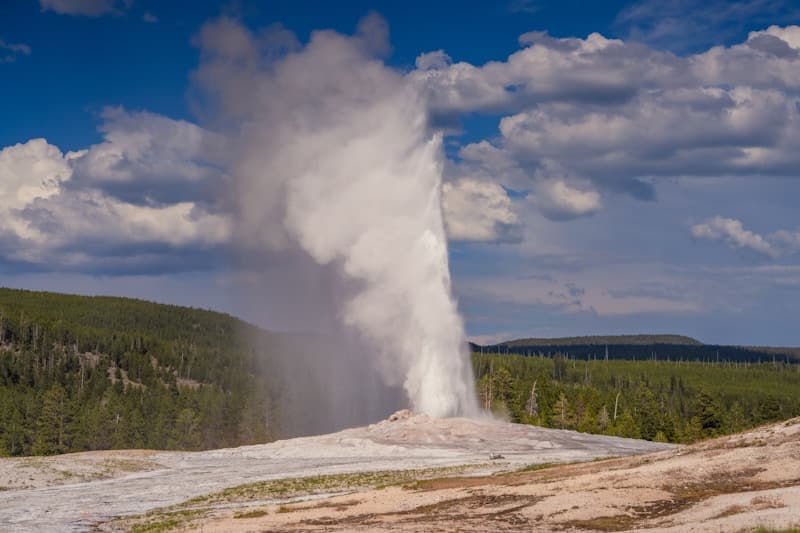
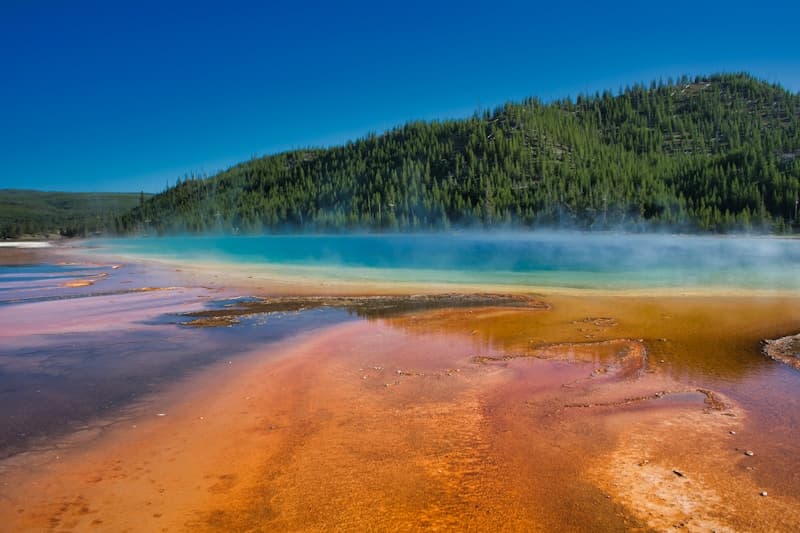
Madison Campground puts you 30 minutes from Old Faithful and Grand Prismatic Spring. Canyon Campground is a short walk from the Grand Canyon of the Yellowstone and its two major waterfalls. Tower-Roosevelt is the starting point for Lamar Valley wildlife drives. Bridge Bay and Fishing Bridge sit on the shore of Yellowstone Lake.
Old Faithful erupts roughly every 90 minutes, varying between 50 and 127 minutes. The Grand Prismatic Spring overlook is a 0.8-mile hike from the Fairy Falls trailhead in Midway Geyser Basin. Mammoth Hot Springs has travertine terraces and is the only developed area open year-round. For wildlife, drive the Lamar Valley road between Tower Junction and the Northeast Entrance at dawn or dusk. Bison, wolves, elk, and grizzlies are regularly spotted.
Quick Facts
- Entrance Fee
- $35/vehicle (7 days)
- Best Time to Visit
- June – September
- Nearest Town
- West Yellowstone, MT, Gardiner, MT, Cooke City, MT, Cody, WY, Jackson, WY
- Elevation
- 5,282 – 11,358 ft
- Park Size
- 2.2 million acres
- Annual Visitors
- ~4.8 million