A complete guide to camping in New Hampshire
New Hampshire camping concentrates in the White Mountains, where Mount Washington's 6,288-foot summit and the surrounding Presidential Range create the most dramatic above-treeline terrain in the eastern US. Lincoln, Twin Mountain, and Gorham anchor the main access corridors. The White Mountain National Forest covers 800,000 acres with developed campgrounds and extensive backcountry camping. The Appalachian Mountain Club operates a network of hut-to-hut shelters across the ridgeline.
South of the White Mountains, the Lakes Region around Laconia, Wolfeboro, and Lake Winnipesaukee provides warmer, more family-oriented lakefront camping. The seacoast is short (18 miles) but Hampton Beach State Park puts camping on the Atlantic sand. The Connecticut River valley along the western border and the Monadnock region in the southwest add smaller-scale camping away from the White Mountain crowds. Rumney and Thornton sit in the transition zone between the mountains and the lakes.
Mar-May
High 47°F · Low 35°F
Mountain campgrounds stay closed through May due to snow and mud. The Lakes Region opens earlier. Black flies emerge in May. Stream flows run high for fishing and paddling. Cool temperatures with occasional late snow in the mountains.
Jun-Aug
High 70°F · Low 58°F
Peak season. White Mountain campgrounds and AMC huts fill daily in July. The Lakes Region draws swimmers and boaters. Mount Washington summit can still see freezing conditions in any month. Black flies subside by late June.
Sep-Nov
High 47°F · Low 35°F
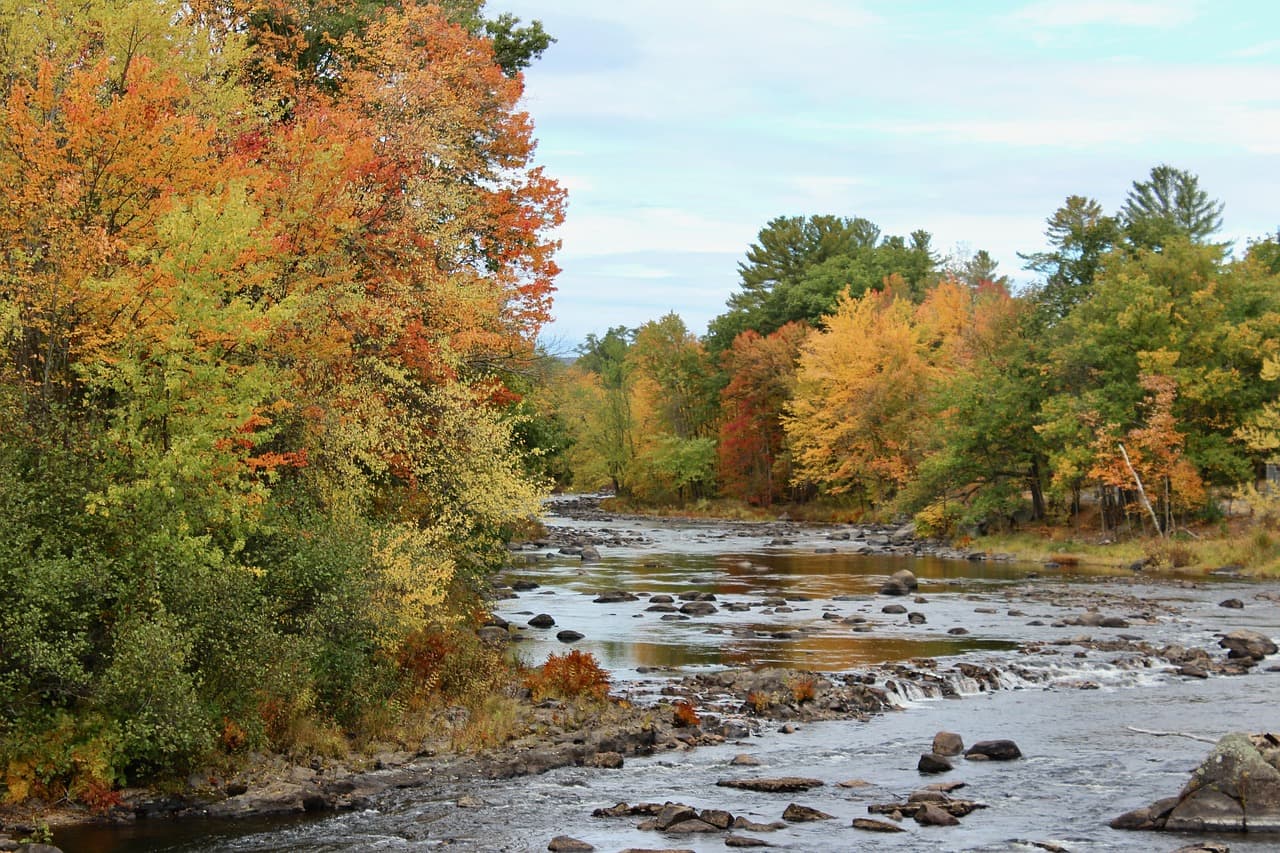
Fall color in the White Mountains peaks in late September through early October. The most popular camping season in the mountains. Kancamagus Highway draws bumper-to-bumper color viewers. Lakes Region follows a week later. Cold nights.
Dec-Feb
High 24°F · Low 12°F
January averages 16 degrees. White Mountain campgrounds close. Mount Washington regularly records the coldest temperatures in the Northeast. Winter mountaineering on the Presidentials draws experienced climbers. Ski areas replace camping tourism.
| Season | Months | Avg High | Avg Low | Conditions |
|---|---|---|---|---|
| Spring | Mar-May | 47°F | 35°F | Mountain campgrounds stay closed through May due to snow and mud. |
| Summer | Jun-Aug | 70°F | 58°F | Peak season. |
| Fall | Sep-Nov | 47°F | 35°F | Fall color in the White Mountains peaks in late September through early October. |
| Winter | Dec-Feb | 24°F | 12°F | January averages 16 degrees. |
Source: NOAA 30-Year Climate Normals

| Region | Terrain | Key Areas |
|---|---|---|
| White Mountains | Mountain | Lincoln, Twin Mountain, Gorham, Conway |
| Lakes Region | Lakefront | Laconia, Wolfeboro, Meredith, Weirs Beach |
| North Country | Forest | Pittsburg, Colebrook, Berlin, Errol |
| Seacoast and Southern | Coastal | Hampton, Rumney, Jaffrey, Keene |
Mountain · Lincoln, Twin Mountain, Gorham, Conway
The dominant camping region. The Presidential Range, Franconia Ridge, and the Kancamagus Highway corridor draw hikers, backpackers, and car campers. Lincoln and Twin Mountain are the primary base towns. Developed campgrounds along the Kanc and in Crawford Notch. The AMC hut system provides ridgeline accommodations. Country Bumpkins Campground and Cabins in Lincoln and Along the River Campground near Twin Mountain provide private bases along the Kancamagus and Crawford Notch corridors.
Lakefront · Laconia, Wolfeboro, Meredith, Weirs Beach
Lake Winnipesaukee and the surrounding smaller lakes south of the White Mountains. Warmer water, family-oriented campgrounds, and resort-town amenities. Laconia and Wolfeboro anchor the tourism. Ellacoya State Park on Winnipesaukee is the most competitive lakefront campground. Swimming, boating, and fishing drive the activity. Paugus Bay Campground in Laconia and Wolfeboro Campground serve the Lake Winnipesaukee camping demand from opposite shores.
Forest · Pittsburg, Colebrook, Berlin, Errol
The region north of the White Mountains toward the Canadian border. Less visited than the Whites with more boreal character. Connecticut Lakes and Lake Francis provide remote lake camping. Moose density is high. Pittsburg at the top of the state feels more like Maine than New Hampshire. Mountain View Cabins and Campground and Ramblewood Cabins in Pittsburg serve the Connecticut Lakes region near the Canadian border.
Coastal · Hampton, Rumney, Jaffrey, Keene
New Hampshire's 18-mile coastline at Hampton Beach provides the only ocean camping in the state. Monadnock State Park in the southwest centers on Mount Monadnock, one of the most climbed mountains in North America. The Connecticut River valley along the western border adds river-corridor camping. Tidewater Campground and Hampton Beach State Park Campground in Hampton provide the primary coastal camping, while Rumney Rattlesnake Campground covers the inland climbing area.

Higher elevations above 3,000 feet begin turning in mid-September. The Kancamagus Highway and Franconia Notch peak in late September through the first week of October. Lower elevations and the Lakes Region follow through mid-October. The White Mountains are among the earliest fall color destinations in New England.
The Appalachian Mountain Club operates eight backcountry huts along the Presidential Range and Franconia Ridge in the White Mountains. Huts provide bunk-style lodging and meals (breakfast and dinner). No electricity at most huts. Reservations required and competitive for summer. A unique alternative to tent camping in the alpine zone.
Mount Washington has extreme weather that has killed over 160 people. The summit experiences hurricane-force winds regularly and temperatures can drop below zero in any month. The Tuckerman Ravine and Lion Head trail routes are strenuous. Check the Mount Washington Observatory forecast before climbing. Start early and turn back if conditions deteriorate.
The White Mountain National Forest permits dispersed camping on most forest land. Camp at least 200 feet from trails and water, and at least a quarter mile from roads, shelters, and developed areas. Above-treeline camping is prohibited except at designated sites. No permit required but parking requires a Recreation Pass.
The 34-mile scenic highway through the White Mountains draws heavy traffic on summer and fall color weekends. Campgrounds along the Kanc (Hancock, Big Rock, Covered Bridge) fill by mid-morning on peak weekends. Fall foliage season in late September through early October brings bumper-to-bumper traffic. Weekday visits are significantly less crowded.