A complete guide to camping in Kansas

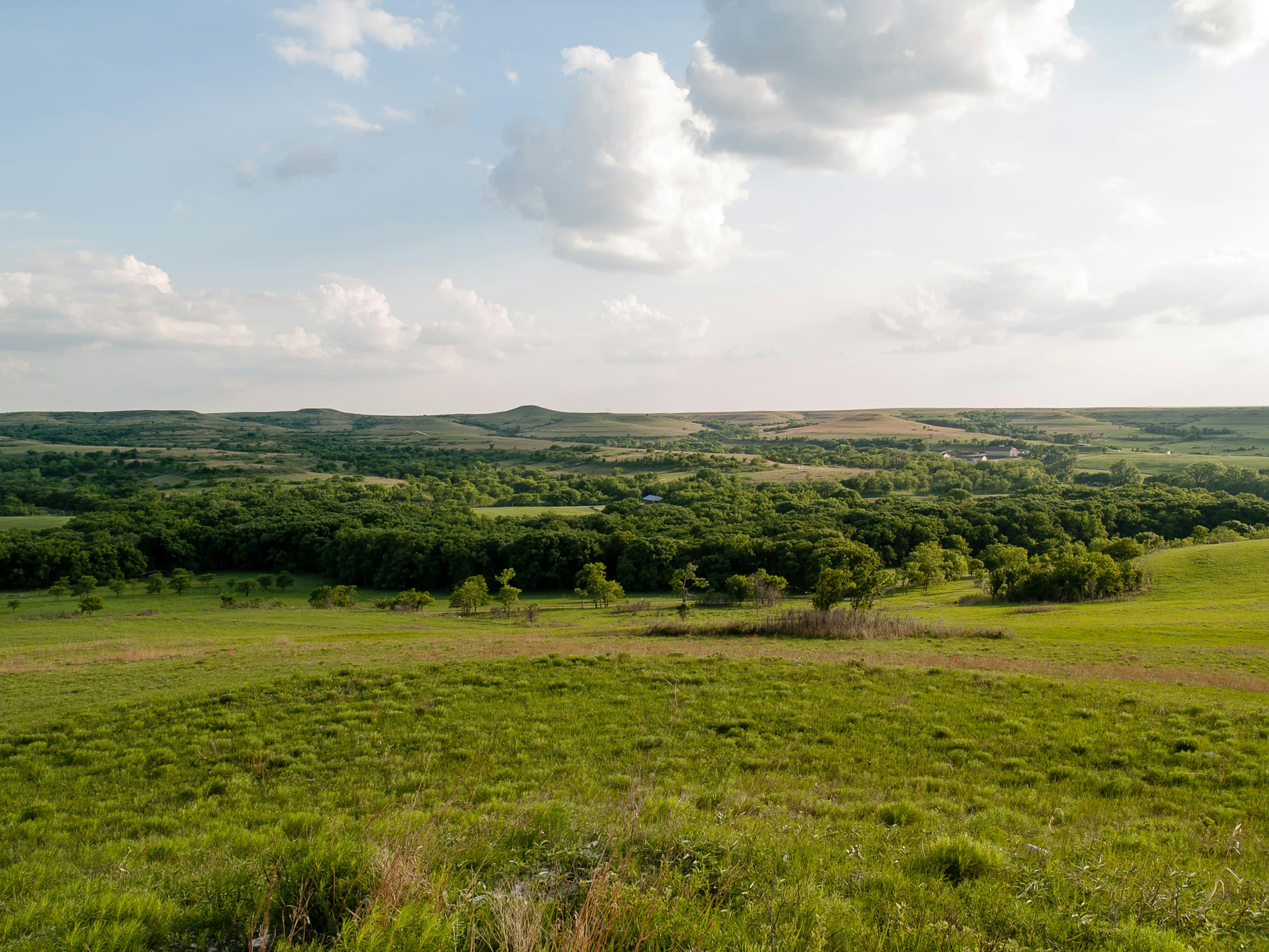
Kansas camping operates on the open prairie with more sky than terrain. The state's reputation as flat is partially earned, though the Flint Hills in the east hold the last remaining tallgrass prairie ecosystem in the country, and the Smoky Hills and High Plains in the west add modest elevation changes. The camping infrastructure centers on state parks built around reservoirs. Clinton, Milford, and Tuttle Creek lakes near the eastern population centers provide the most used campgrounds.
The western third of the state climbs into the High Plains above 3,000 feet, where temperatures run hotter in summer and colder in winter. Scott City and the Arikaree Breaks provide unexpected canyon and chalk-formation landscapes. The Kansas River and its tributaries provide the riparian corridors that break up the grassland. Lawrence, Edwardsville, and the Kansas City fringe hold the most accessible camping for the state's eastern metro population.
Mar-May
High 60°F · Low 48°F
Tallgrass prairie greens up. Wildflowers bloom across the Flint Hills. Temperatures reach the 60s and 70s. Tornado season increases through May. Lake levels rise.
Jun-Aug
High 83°F · Low 71°F
Hot across the state. July averages 79 degrees with western Kansas exceeding 95 regularly. Lake campgrounds draw swimmers. Reservoir levels may drop by late summer. Tornado risk continues into June.
Sep-Nov
High 60°F · Low 48°F
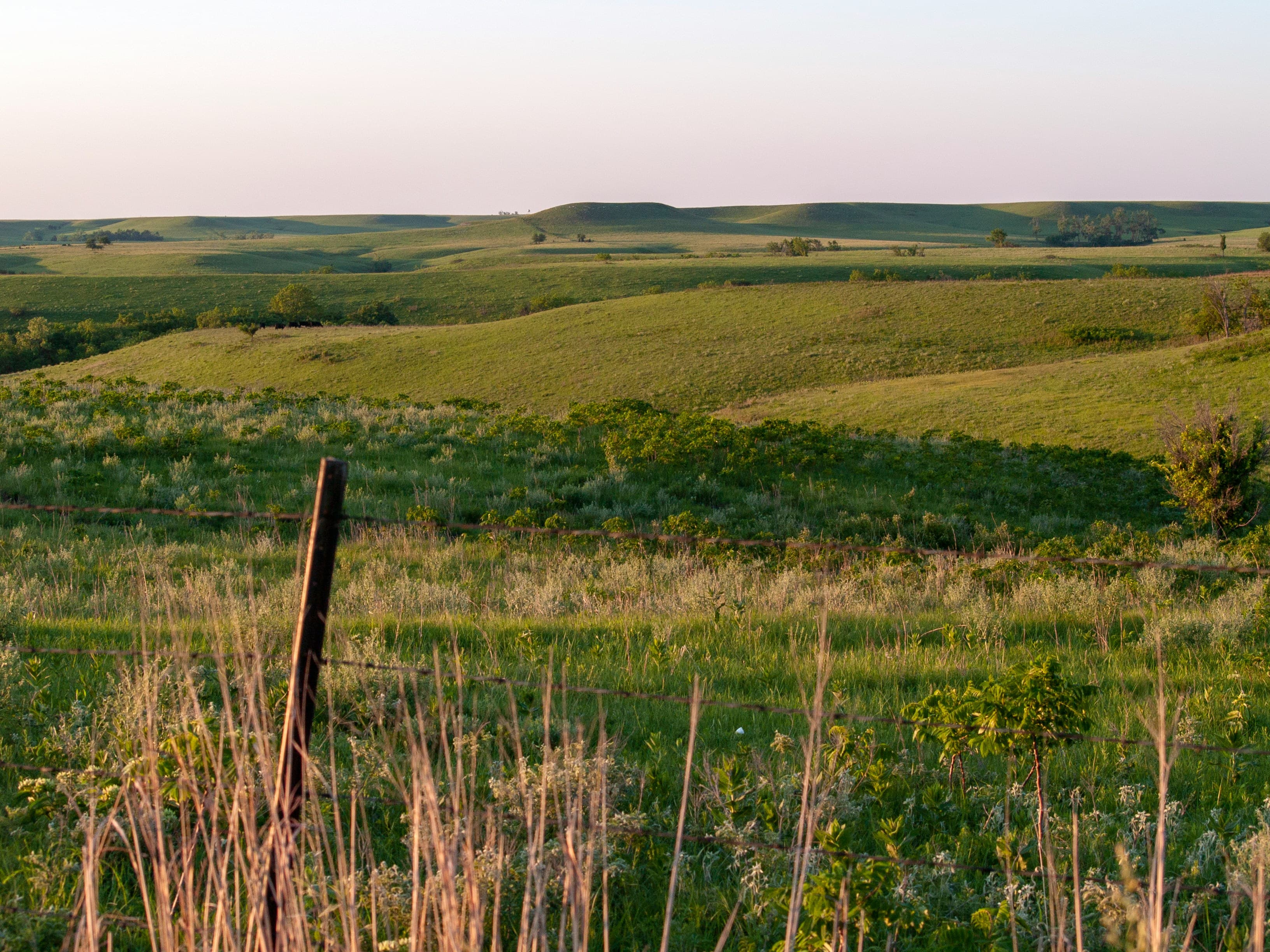
Temperatures moderate. The Flint Hills turn gold and brown. Lake fishing picks up as water cools. Campground availability improves. Fall burning on the tallgrass prairie creates dramatic landscapes.
Dec-Feb
High 38°F · Low 26°F
January averages 30 degrees. Wind chill makes it feel colder. Most campgrounds stay open but see minimal use. Western Kansas gets genuinely cold. Ice fishing replaces open-water activity on reservoirs.
| Season | Months | Avg High | Avg Low | Conditions |
|---|---|---|---|---|
| Spring | Mar-May | 60°F | 48°F | Tallgrass prairie greens up. |
| Summer | Jun-Aug | 83°F | 71°F | Hot across the state. |
| Fall | Sep-Nov | 60°F | 48°F | Temperatures moderate. |
| Winter | Dec-Feb | 38°F | 26°F | January averages 30 degrees. |
Source: NOAA 30-Year Climate Normals

| Region | Terrain | Key Areas |
|---|---|---|
| Flint Hills and Tallgrass Prairie | Plains | Strong City, Fall River, El Dorado, Manhattan |
| Eastern Lakes and Kansas City | Lakefront | Lawrence, Oskaloosa, Edwardsville, Junction City |
| Smoky Hills and Central Kansas | Plains | Ellsworth, Wilson, Marquette, Russell |
| High Plains and Western Kansas | Plains | Scott City, Oakley, Garden City, Goodland |
Plains · Strong City, Fall River, El Dorado, Manhattan
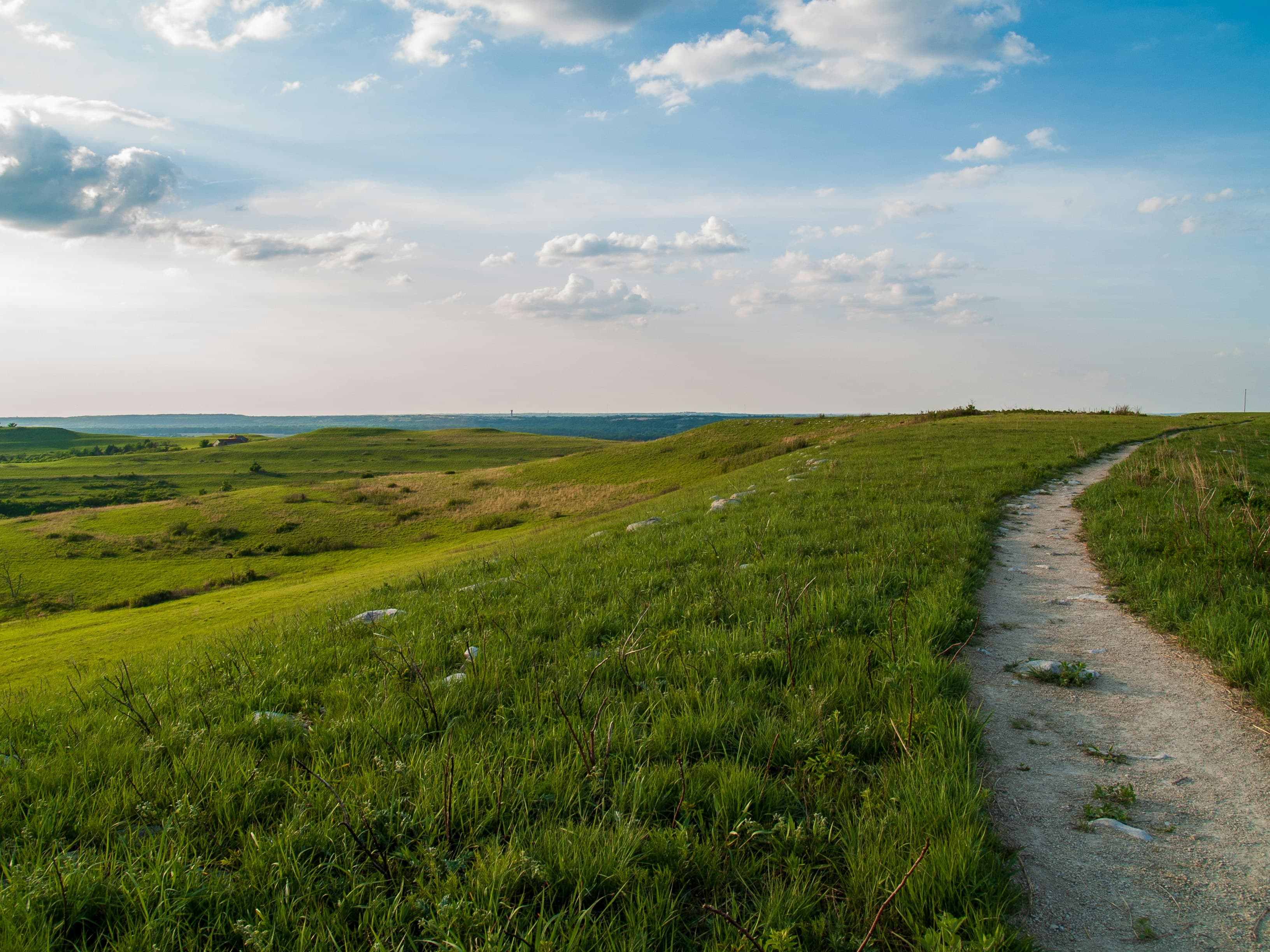
The last major expanse of tallgrass prairie in North America. Rolling hills of bluestem grass stretching across east-central Kansas. Tallgrass Prairie National Preserve near Strong City is the centerpiece. State parks at El Dorado and Fall River provide lake camping in the Flint Hills region. The landscape is defined by grass, sky, and wind. Fredonia Bay Campground and Casner Creek Campground near Fall River provide developed camping within the Flint Hills grassland.
Lakefront · Lawrence, Oskaloosa, Edwardsville, Junction City
Reservoir-based camping serving the eastern population centers. Clinton Lake near Lawrence, Perry Lake near Oskaloosa, and Milford Lake (the state's largest) provide developed campgrounds. Corps of Engineers and state park facilities. The most accessible camping from Kansas City, Topeka, and Lawrence. Kansas City West KOA Holiday and Coneflower Campground near Lawrence, and Happy Joy Acres near Oskaloosa serve the eastern metro population.
Plains · Ellsworth, Wilson, Marquette, Russell
The Smoky Hill River corridor through central Kansas with rolling terrain and sandstone outcrops. Kanopolis State Park has sandstone caves and bluffs. Wilson Lake provides clear water in a prairie setting. Mushroom Rock State Park has unique rock formations. Less crowded than the eastern lakes. Fairway RV Park in Ellsworth and Wilson RV Park near Wilson Lake provide the primary central Kansas camping options.
Plains · Scott City, Oakley, Garden City, Goodland
Flat to gently rolling plains above 3,000 feet. Monument Rocks and Castle Rock are national natural landmarks with chalk formations rising from the prairie. Scott State Park has a spring-fed lake in a canyon. The Arikaree Breaks in the northwest corner provide unexpected badlands terrain. Remote and sparsely populated. Pine Tree RV Park and Lake View Campground in Scott City, and High Plains Camping near Oakley serve the remote western corridor.

Eastern Kansas has rolling Flint Hills and river valleys with genuine terrain. Central Kansas has sandstone formations and the Smoky Hills. Western Kansas is the flattest part, though Monument Rocks and Castle Rock provide dramatic chalk outcrops on the plains. The state has more topographic variety than its reputation suggests.
Spring burning season (March through April) creates the most dramatic prairie landscape as ranchers burn to promote new growth. The fresh green that follows is striking. Late summer (August through September) shows the tallgrass at its maximum height, reaching six feet or more. Fall brings golden-brown color.
Kansas averages 96 tornadoes per year, concentrated from March through June. State park campgrounds have designated storm shelters. The risk is real but manageable with awareness. Monitor forecasts, know your shelter location, and have a weather alert system. Western Kansas has a slightly lower tornado frequency than the eastern half.
Chalk formations rising 70 feet from the western Kansas prairie, formed from ancient ocean deposits. A national natural landmark on private land with public access. Castle Rock nearby offers similar formations. Both are free to visit. No campgrounds at the sites but dispersed camping options exist on nearby land.
Kansas reservoirs provide excellent fishing for walleye, crappie, bass, and catfish. Milford Lake is the state's largest and most productive fishery. El Dorado Lake and Clinton Lake are also strong. The Kansas River system supports channel catfish and flathead catfish. A state fishing license is required.