A complete guide to camping in Connecticut
Connecticut camping operates at a smaller scale than its New England neighbors, fitting into a state roughly 90 miles long and 70 miles wide. The camping character builds around state parks and forests in the northwestern hills and the quiet eastern woodlands. The Litchfield Hills in the northwest hold the highest terrain and the most developed camping, with Housatonic Meadows and Macedonia Brook state parks along the Housatonic River corridor. Goshen and the surrounding hill towns provide a rural character that feels removed from the metro areas.
The eastern half of the state around Voluntown, Chester, and the Pachaug State Forest holds Connecticut's largest state forest with the most extensive camping. The shoreline along Long Island Sound has limited camping but Hammonasset Beach State Park in Madison provides the primary coastal option. Connecticut sits between the New York City and Boston metro areas, making weekend camping competitive at popular parks despite the state's small size.
Mar-May
Mountain laurel (the state flower) blooms in June. Campgrounds open in April and May. Cool temperatures through May. The Housatonic and Farmington rivers run high for fishing.
Jun-Aug
Peak season. Hammonasset Beach campground fills on summer weekends. The Litchfield Hills provide cooler temperatures than the coast or Connecticut River valley. Swimming in lakes and rivers warms by late June.
Sep-Nov
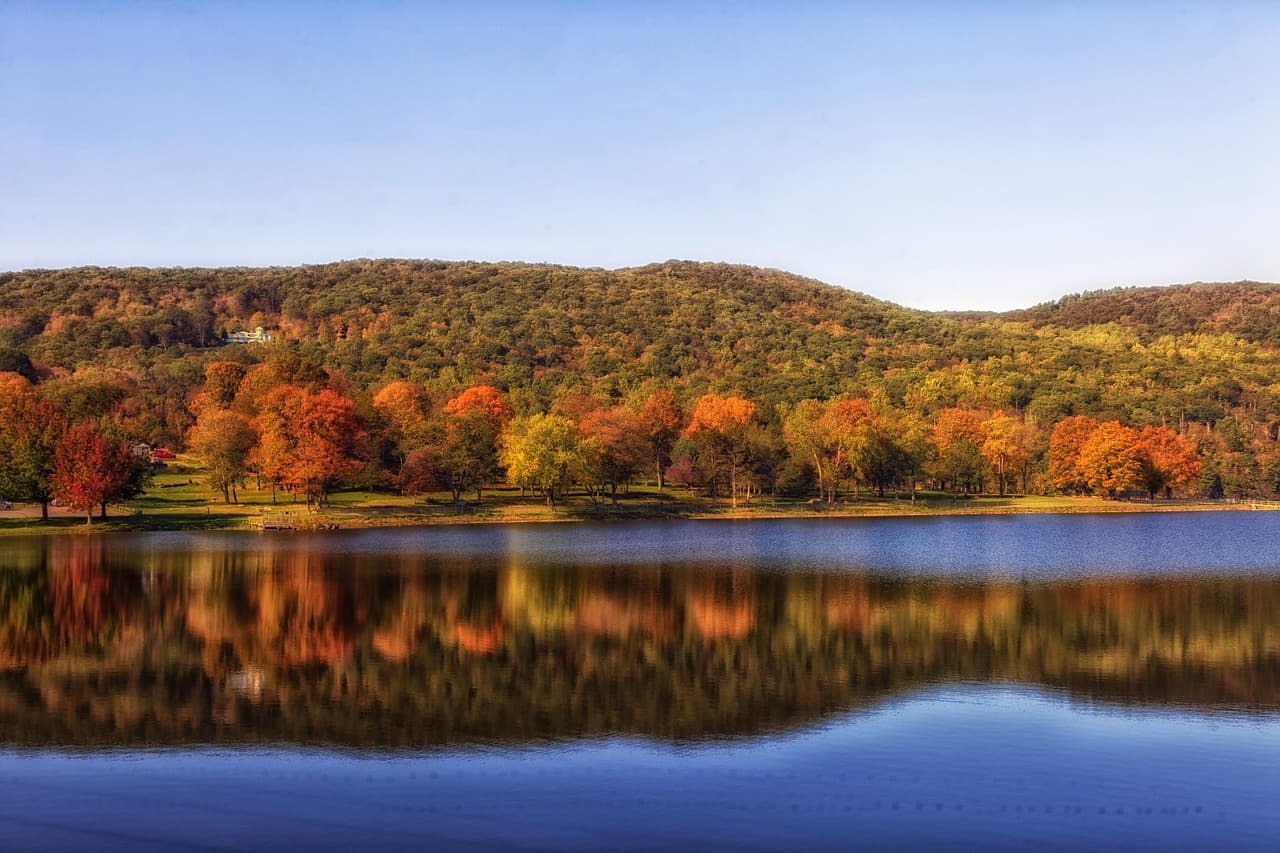
Fall color in the Litchfield Hills peaks in mid to late October. The most scenic camping window. Campgrounds thin after Labor Day except for peak color weekends. Covered bridge tours through the northwest hills.
Dec-Feb
Most campgrounds close by late October. The Litchfield Hills receive moderate snow. No significant winter camping infrastructure. Cross-country skiing at state parks replaces camping.
| Season | Months | Avg High | Avg Low | Conditions |
|---|---|---|---|---|
| Spring | Mar-May | — | — | Mountain laurel (the state flower) blooms in June. |
| Summer | Jun-Aug | — | — | Peak season. |
| Fall | Sep-Nov | — | — | Fall color in the Litchfield Hills peaks in mid to late October. |
| Winter | Dec-Feb | — | — | Most campgrounds close by late October. |
Source: NOAA 30-Year Climate Normals

| Region | Terrain | Key Areas |
|---|---|---|
| Litchfield Hills and Northwest | Mountain | Goshen, Kent, Cornwall, Litchfield |
| Eastern Woodlands | Forest | Voluntown, Preston, Chester, East Hampton |
| Long Island Sound Shore | Coastal | Madison, East Lyme, Westbrook, Old Saybrook |
Mountain · Goshen, Kent, Cornwall, Litchfield
The highest terrain in Connecticut with rolling hills, covered bridges, and the Housatonic River. Housatonic Meadows, Macedonia Brook, and Lake Waramaug state parks anchor the camping. The Appalachian Trail passes through Kent and Cornwall. Goshen and Woodstock provide a rural New England character. Hemlock Hill Camp Resort in Goshen and campgrounds near Kent along the Appalachian Trail corridor serve the Litchfield Hills camping demand.
Forest · Voluntown, Preston, Chester, East Hampton
Pachaug State Forest near Voluntown covers over 27,000 acres and provides the most extensive camping in the state. Green Falls and Mount Misery campgrounds sit within the forest. The terrain is lower and flatter than the northwest hills. Quieter than the western parks. Nature's Campsites in Voluntown and Strawberry Park Resort Campground in Preston provide the primary Pachaug State Forest area options.
Coastal · Madison, East Lyme, Westbrook, Old Saybrook
Hammonasset Beach State Park in Madison provides the primary shoreline camping with beach access on Long Island Sound. Rocky Neck State Park in East Lyme adds a second coastal option. The Connecticut shore is more sheltered than the open Atlantic coast, with warmer water and calmer conditions. Aces High RV Park and The Island Campground and Cottages in East Lyme serve the Rocky Neck State Park coastal area.

Connecticut is small but its state park system is well-maintained. The Litchfield Hills in the northwest provide genuine rural mountain character. The eastern woodlands around Pachaug State Forest have extensive trail systems. No campground is truly remote, but the proximity to towns means convenient access to restaurants and supplies.
Hammonasset Beach State Park in Madison is the primary option with two miles of beach on Long Island Sound and a large campground. Rocky Neck State Park in East Lyme provides a smaller alternative with a crescent beach. Both fill on summer weekends. Book months ahead.
Lyme disease was first identified in Old Lyme, Connecticut, in 1975. The state has high tick populations and Lyme disease rates. Deer ticks are active from April through November in wooded and grassy areas. Connecticut campgrounds require standard tick prevention measures at all times of year except deep winter.
The AT enters Connecticut from New York in the southwest and crosses 52 miles of the Litchfield Hills before entering Massachusetts. The trail passes through Kent, Cornwall, Falls Village, and Salisbury. Housatonic Meadows and other state parks along the route provide camping near the trail.
Five months ahead for popular parks. Hammonasset Beach and Litchfield Hills parks fill within days of opening for summer dates. Eastern woodland parks like Pachaug have more availability. Fall foliage weekends in October also book quickly for northwest Connecticut parks.