Camping Near Great Sand Dunes National Park
Colorado | Established 2004
About Great Sand Dunes National Park
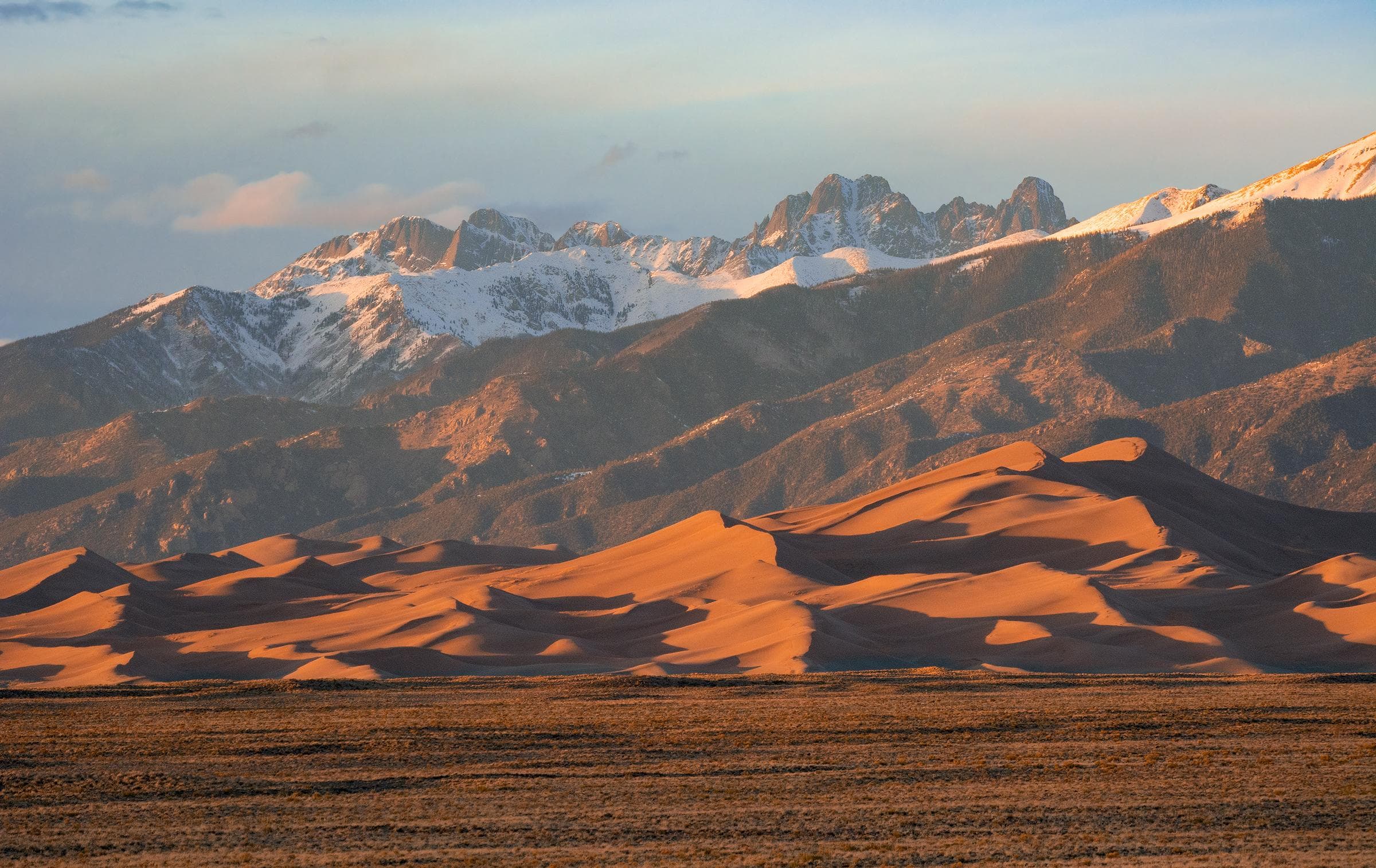
Great Sand Dunes National Park protects the tallest dunes in North America, rising over 750 feet against the Sangre de Cristo Mountains in southern Colorado's San Luis Valley. The park sits at 8,170 feet elevation, creating extreme temperature swings: summer sand surfaces exceed 150°F at midday while nighttime lows drop into the 40s. Medano Creek flows seasonally along the dune base from April through June, creating a shallow beach popular for wading and sand play.
Pinon Flats Campground is the park's only developed campground with 88 sites at $20/night, reservable on recreation.gov up to five months in advance. Sites accommodate tents and RVs up to 35 feet with no hookups. Flush toilets and potable water are available April through October. Medano Pass Primitive Road offers 21 free first-come, first-served backcountry sites accessible only by high-clearance 4WD vehicles. Backcountry camping on the dunefield itself is allowed with a free permit, letting campers sleep directly on the sand under dark skies.
Camping Tips for Great Sand Dunes
- Reserve Pinon Flats on recreation.gov five months ahead for summer weekends. The 88 sites fill quickly May through September. Set a calendar reminder for the booking window opening.
- Plan dune activities for early morning or evening when sand temperatures are tolerable. Midday sand exceeds 150°F and causes burns on bare feet within seconds. Always wear closed shoes on the dunes.
- Acclimate to 8,170-foot elevation on your first day. Drink at least three liters of water daily, avoid strenuous hiking on arrival, and expect headaches or fatigue until your body adjusts.
- Visit Medano Creek April through June for peak water flow. The seasonal creek creates a wide, shallow beach at the dune base ideal for wading, but it dries completely by mid-July most years.
- Bring a sleeping bag rated to 20°F even in summer. Nightly temperature drops of 40 to 50 degrees are normal at this elevation. Wind off the San Luis Valley makes perceived temperatures even colder.
RV Parks & Campgrounds Near Great Sand Dunes National Park

71.Lake Isabel North Shore Parking Area (recgovnpsdata)
From the prairies of western Kansas to some of the highest mountain peaks along the Continental Divide in Colorado, the Pike-San Isabel National Forests & Cimarron and Comanche...
Show more
72.Conejos Campground
From the Sangre de Cristo Mountains to the San Juan Mountains, the jagged peaks and rushing rivers of the San Luis Valley public lands wrap themselves around this Rocky Mountain...
Show more
73.St. Charles Campground
Nestled among aspen and tall Douglas fir trees, St. Charles Campground is in a quiet part of the Lake Isabel Recreation Area. Located on the banks of St. Charles Creek, the...
Show more
74.Spectacle Lake Campground
The Rio Grande National Forest offers uncrowded year-round recreation opportunities, from mountain scenery to challenging trails. Visitors can camp, hike, fish, and explore the...
Show more75.Purgatoire Campground
Purgatoire Campground is a scenic camping destination offering a range of outdoor recreation opportunities. The campground provides various accommodation options to suit different...
Show more76.Five Points Campground
Five Points Campground is located in the Arkansas Headwaters Recreation Area, offering a variety of camping options and outdoor activities. The campground is situated near the...
Show more
77.Lake Creek Campground
From the prairies of western Kansas to some of the highest mountain peaks along the Continental Divide in Colorado, the Pike-San Isabel National Forests & Cimarron and Comanche...
Show more78.The Rosedale Vintage Mobile Home Park
The Rosedale Vintage Mobile Home Park is a one of a kind experience in Vintage Living. Units from the 50's and 60's were painstakingly restored using original ads to recreate the...
Show more
79.South Colony Basin
From the prairies of western Kansas to some of the highest mountain peaks along the Continental Divide in Colorado, the Pike-San Isabel National Forests & Cimarron and Comanche...
Show more
80.Royal Gorge Park East Ridge Campground
East Ridge Campground is located 20 minutes west of Cañon City and is open year-round. The campground has twenty-three newly constructed and designated campsites, each...
Show moreShowing 71–80 of 137 campgrounds within 50 miles
Frequently Asked Questions
Can I camp directly on the sand dunes?
Yes. Free backcountry permits allow camping on the dunefield in the national park section. No permit is needed in the adjacent National Preserve areas. Campers must set up out of sight from trails and parking areas, at least one mile from any trailhead.
Dune camping offers a unique experience unavailable at most parks. Sand provides excellent drainage and a surprisingly comfortable sleeping surface with a thick pad. Carry at least one gallon of water per person per day since no water sources exist on the dunes. Use a camp stove only since wood fires are prohibited. Spring and fall provide the most comfortable sand temperatures. Summer dune camping requires evening setup after the sand cools.
What is the Medano Pass Primitive Road?
Medano Pass is a 4WD-only road on the park's east side with 21 free first-come, first-served primitive campsites in pinyon and aspen forest. The road requires high-clearance four-wheel drive and crosses sand and water. It connects to the Sangre de Cristo backcountry.
Standard SUVs and crossovers often get stuck in the deep sand sections. True 4WD with low range and high clearance is essential. The road opens seasonally, typically May through November depending on snow. Sites have no water or facilities. Fat tire bikes are permitted on the road for a unique backcountry experience. Check conditions at the visitor center before attempting the drive.
How does the altitude affect camping here?
Pinon Flats Campground sits at 8,170 feet elevation. Altitude-related symptoms including headaches, fatigue, insomnia, and shortness of breath commonly affect visitors arriving from lower elevations. Most symptoms typically resolve within 24 to 48 hours with proper hydration, rest, and gradual activity.
Drink three or more liters of water daily and avoid alcohol on your first day. Ibuprofen can help with altitude headaches. Pre-arrival fitness level does not predict altitude susceptibility. Children and elderly visitors may be more sensitive. Consider arriving a day early and spending your first night adjusting before strenuous dune hiking. The dune summits reach above 8,900 feet, adding another 700 feet of gain from the campground.
What temperature extremes should campers expect?
Daily temperature swings routinely exceed 50°F. Summer days reach 85 to 95°F while nights drop to 35 to 45°F. Spring and fall bring pleasant daytime temperatures of 60 to 75°F but near-freezing overnight lows. Sand surface temperatures can exceed 150°F at midday in summer.
Pack layers for every season: lightweight shirts for hot afternoons, insulated jackets for cold mornings, and a warm hat for overnight. A foam sleeping pad outperforms air mattresses at this elevation since air pads conduct ground cold directly to your body. Merino wool base layers regulate temperature better than cotton across the wide daily range. Wind off the San Luis Valley adds a significant chill factor, especially at dawn.
Is sand sledding allowed, and what equipment do I need?
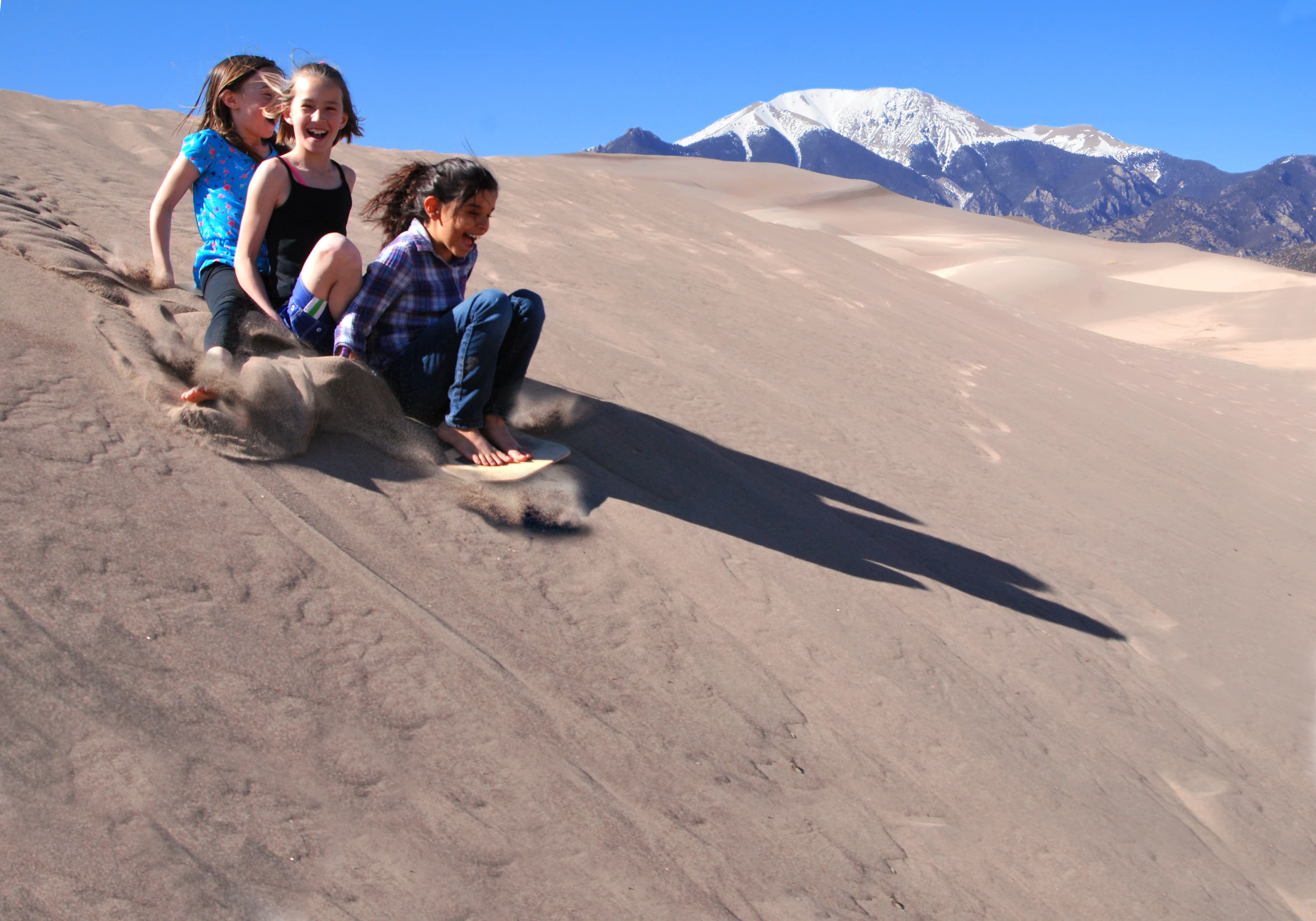
Sand sledding is allowed anywhere on the dunes with no permit required. The park does not provide or rent equipment. Bring a commercial sand sled or disc; cardboard works once but disintegrates quickly. Plastic saucers and foam sleds from nearby Alamosa shops work well.
The best sledding slopes are on the steep lee sides of High Dune, about a two-hour roundtrip hike from the parking area. Early morning and evening offer firmer sand and faster runs when residual moisture from overnight cooling aids speed. Waxing the bottom of your sled with household candle wax increases speed significantly. Late afternoon sledding risks foot burns from hot sand on the approach hike.
When does Medano Creek flow, and is it good for wading?
Medano Creek typically flows April through late June, peaking in late May from snowmelt. The creek creates a wide, shallow beach at the dune base with surge waves that make it popular for families and children. By mid-July most years, the creek dries completely.
Call the park at 719-378-6395 for current creek conditions before your trip. Water depth varies from inches to about two feet during peak flow. The creek bottom is sandy and gentle, safe for small children to wade. Water temperature stays cold even in warm weather since it originates from mountain snowmelt. Creek-side spots near the Dunes Parking Area are the most popular gathering area in the park.
Is Great Sand Dunes a good dark sky park?
Yes. Great Sand Dunes holds International Dark Sky Park certification. The park sits in a remote valley with minimal surrounding light pollution. The Milky Way is visible to the naked eye on clear, moonless nights. Free ranger-led astronomy programs run seasonally.
New moon periods in summer and early fall offer the best stargazing. Bring a red-light headlamp to preserve night vision. Camping at Pinon Flats puts you minutes from excellent viewing locations. The dunes themselves make a dramatic foreground for night sky photography. Check the park website for scheduled night sky program dates. The high elevation and dry climate contribute to exceptional transparency and seeing conditions.
How far in advance should I book Pinon Flats Campground?
Reservations open five months in advance on recreation.gov. Summer weekend dates from May through September typically book within two to three weeks of becoming available. Spring and fall weekdays offer easier availability but still require advance planning for holidays and popular weekends.
Set a calendar reminder for your target date minus five months. New availability appears daily at 7 a.m. Mountain Time. Holiday weekends like Memorial Day and Labor Day sell out fastest. Cancellations occasionally appear mid-week, so check recreation.gov regularly if your preferred dates are full. The 88 sites include a mix of tent-only and tent/RV sites, so filter by your vehicle type when searching.
Quick Facts
- Entrance Fee
- $25/vehicle (7 days)
- Best Time to Visit
- April – October
- Nearest Town
- Alamosa, CO, Mosca, CO, Fort Garland, CO
- Elevation
- 7,520 – 13,604 ft
- Park Size
- 149,137 acres
- Annual Visitors
- ~0.8 million