Camping Near Congaree National Park
South Carolina | Established 2003
About Congaree National Park
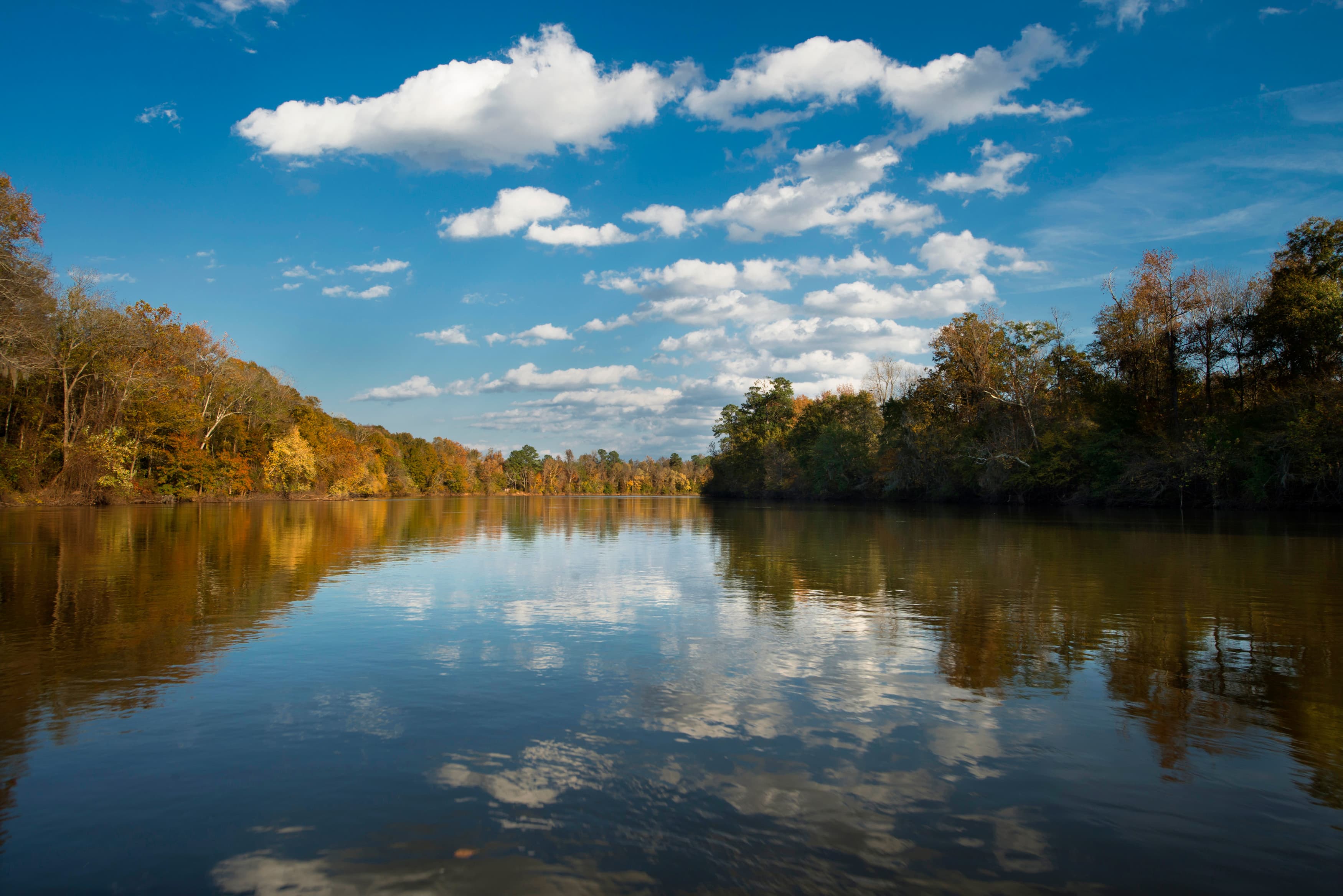
Congaree National Park protects 26,545 acres of old-growth bottomland hardwood forest where the Congaree and Wateree Rivers converge near Columbia, South Carolina. The park contains some of the tallest trees in the eastern United States, including national and state champion specimens of loblolly pine, sweetgum, and bald cypress. Periodic flooding enriches the floodplain roughly ten times per year, creating a dynamic ecosystem recognized as a UNESCO Biosphere Reserve. A 2.4-mile elevated boardwalk provides accessible passage through the forest canopy.
Longleaf Campground offers 10 individual sites at $15 per night and 4 group sites at $25 per night with fire rings, picnic tables, and vault toilets. Bluff Campground provides 6 walk-in sites at $10 per night requiring a one-mile hike with no water or restroom facilities. Backcountry camping requires free permits obtained at least 72 hours in advance. Columbia (30 miles) serves as the primary gateway for supplies and services.
Camping Tips for Congaree
- Reserve Longleaf Campground through recreation.gov well in advance. The 10 individual sites and 4 group sites fill quickly for peak season (October through April). No hookups, showers, or running water are available at either campground.
- Check flood conditions before visiting. The park floods roughly ten times per year, closing the boardwalk and backcountry trails for days at a time. Monitor water gauge readings on the park website for Cedar Creek and the Congaree River.
- Pack heavy insect protection from May through September. Mosquitoes are intense in the humid bottomland forest during warm months. Bring EPA-approved repellent and permethrin-treated clothing. October through April offers significantly fewer biting insects.
- Carry all drinking water since neither campground has potable water. Bring at least one gallon per person per day. The nearest full services including showers, groceries, and fuel are in Cayce (15 miles) or Columbia (30 miles).
- Obtain free backcountry permits at least 72 hours before arrival by emailing cong_information@nps.gov or calling 803-776-4396. Groups are limited to 6 people. Open fires are prohibited in the backcountry; bring a backpacking stove.
RV Parks & Campgrounds Near Congaree National Park

101.Gaston Mobile Home Community
Gaston Mobile Home Community is a campground located in Gaston, South Carolina. The facility offers mobile home accommodations for visitors to the area. With a Google rating of...
Show more102.38 Johnson park camp ground
38 Johnson Park Campground is located in Chesterfield, South Carolina, offering a convenient camping destination in the Midlands region. The campground provides a range of...
Show more103.Quail Ridge Campground - McBee, SC
Quail Ridge Campground is located in McBee, South Carolina, offering a peaceful camping experience in the heart of the state. This campground provides a comfortable retreat for...
Show more104.East Carolina CzhC Campground
East Carolina CzhC Campground is located in Elgin, South Carolina, offering camping accommodations in the area. The campground provides a base for visitors looking to explore the...
Show more105.Campground
Located in Blair, South Carolina, this campground offers a basic camping experience in the area. With limited reviews available, potential visitors should note the current rating...
Show more106.Gatlingurg,Tn
Located in Columbia, South Carolina, this campground offers a convenient base for exploring the region. The facility provides various camping accommodations for visitors seeking...
Show more107.Campground
Located in Eutawville, South Carolina, this campground offers a convenient base for exploring the Lowcountry region. The facility provides camping accommodations for visitors...
Show more108.RiverRidge campground
RiverRidge Campground is a scenic camping destination located in Orangeburg, South Carolina. The campground offers a peaceful retreat along the river, making it an ideal spot for...
Show more109.Hidden Meadows RV Park & Campground
Hidden Meadows RV Park & Campground is a welcoming RV destination located in Orangeburg, South Carolina. The park offers spacious sites designed to accommodate recreational...
Show more110.Wanderlust Vintage Camping
Wanderlust Vintage Camping is a unique campground located in West Columbia, South Carolina, offering a nostalgic camping experience in the heart of the Midlands. This...
Show moreShowing 101–110 of 110 campgrounds within 50 miles
Frequently Asked Questions
Is Congaree National Park free to visit?
Yes, Congaree has no entrance fee. You only pay for camping: Longleaf Campground costs $15 per night for individual sites and $25 for group sites, Bluff Campground costs $10 per night, and backcountry camping is free with a required permit obtained 72 hours in advance.
The free admission policy makes Congaree accessible for day visitors who can enjoy the 2.4-mile boardwalk, all hiking trails, and the Harry Hampton Visitor Center without any charge. Senior and Access Pass holders receive 50 percent off camping fees. Reservations through recreation.gov are required for both Longleaf and Bluff campgrounds. Day visitors can explore the canoe launch, fishing areas, and ranger programs at no cost.
When is the best time to camp at Congaree?
October through April offers the most comfortable conditions with mild temperatures, minimal mosquitoes, and generally stable water levels. Fall brings daytime highs in the 70s and nighttime lows in the 50s. Summer heat exceeds 95 degrees with oppressive humidity and intense mosquito activity throughout the bottomland forest.
Peak camping season runs October through November and March through April when temperatures are pleasant and insect pressure is low. Winter (December through February) remains mild for the Southeast but periodic flooding can close trails. Summer visitors should expect mosquitoes despite repellent. The park hosts synchronized firefly events in late May, drawing visitors who camp at Longleaf for the display. Ranger-led programs operate year-round on Saturdays.
What campground facilities are available?
Longleaf Campground has 10 individual sites and 4 group sites with fire rings, picnic tables, and vault toilets but no running water, showers, or hookups. Bluff Campground offers 6 primitive walk-in sites with fire rings and picnic tables only, requiring a one-mile hike from parking.
Both campgrounds operate year-round through recreation.gov reservations. Longleaf sites are a short walk from parking. Bluff provides a more secluded backcountry feel without requiring a permit. Neither campground accommodates RVs. The nearest showers, laundry, and grocery stores are in Cayce (15 miles) or Columbia (30 miles). Water from any park source must be treated before drinking. Pack out all trash as there are no dumpsters at Bluff.
Can I canoe or kayak at Congaree?
Yes, Cedar Creek features a marked canoe trail through the bottomland forest open to personal watercraft. No rentals are available in the park so you must bring your own equipment. The Congaree River Blue Trail offers a longer 50-mile paddling route requiring shuttle arrangements and advanced planning.
Cedar Creek paddling is best from September through May when water levels are manageable. High water after heavy rain increases current and submerges trail markers. Low water exposes stumps and logs that create obstacles. Always check current water gauge readings on the park website before launching. Wear a personal flotation device at all times. The park occasionally offers ranger-led canoe trips through seasonal programs. Outfitters in Columbia rent canoes and kayaks for park use.
How does flooding affect camping and trails?
Flooding occurs roughly ten times per year when the Congaree and Wateree Rivers rise, submerging the boardwalk and closing backcountry trails for days. Longleaf Campground sits on higher ground and rarely floods, but Bluff Campground and backcountry sites can become inaccessible during high water events.
The floodplain ecosystem depends on periodic inundation, so flooding is a natural park feature rather than an anomaly. Cedar Creek flood stage is eight feet and the Congaree River floods at fifteen feet. The park website provides real-time water gauge data. Check conditions before reserving backcountry permits since flooded trails may not drain for a week or more. The 2.4-mile boardwalk typically reopens within days of water receding.
What hiking trails are available?
The park offers over 25 miles of hiking trails and a 2.4-mile elevated boardwalk through old-growth forest. The Boardwalk Loop is wheelchair accessible and provides canopy-level views of champion trees. Weston Lake Loop Trail extends 4.4 miles through the floodplain, and the Kingsnake Trail reaches more remote forest sections.
The boardwalk is the most popular trail and requires no special footwear. Longer trails traverse the floodplain and can be muddy or flooded depending on recent rainfall. Wear waterproof boots for any trail beyond the boardwalk. The River Trail (10 miles roundtrip) reaches the Congaree River and connects several loops. Trail junctions are well-marked but carry a map since the flat terrain and dense forest make navigation challenging. Mosquito repellent is essential on all trails during warm months.
What wildlife will I encounter at Congaree?
The park supports feral pigs, white-tailed deer, barred owls, red-shouldered hawks, and over 170 bird species. Otters and turtles inhabit Cedar Creek and the river channels. Synchronized fireflies create a natural light show in late May, drawing visitors from across the country to camp and observe.
Birding is excellent year-round with prothonotary warblers, pileated woodpeckers, and great blue herons among the most visible species. The synchronized firefly event typically occurs over two weeks in late May with limited viewing passes distributed through a lottery on recreation.gov. Venomous snakes including copperheads and cottonmouths inhabit the floodplain; watch where you step on ground-level trails. Feral pigs root through the forest floor and should not be approached.
How far is Congaree from other attractions?
Columbia (30 miles) offers museums, restaurants, and the University of South Carolina campus. Charleston is 100 miles southeast, about a two-hour drive. Francis Marion National Forest (90 miles east) provides additional camping. The park sits along Interstate 77, making it a convenient stop between Charlotte and Charleston.
Columbia Metropolitan Airport is 35 miles from the park entrance for visitors flying in. The park makes an excellent overnight stop on road trips through the Southeast. Nearby Harbison State Forest (20 miles) and Sesquicentennial State Park (25 miles) offer alternative camping if Congaree campgrounds are full. The Congaree River provides fishing access for largemouth bass and catfish with a valid South Carolina fishing license. Downtown Columbia has craft breweries and restaurants within 40 minutes of the park.
Quick Facts
- Entrance Fee
- Free (no entrance fee)
- Best Time to Visit
- October – April
- Nearest Town
- Columbia, SC, Cayce, SC, Hopkins, SC
- Elevation
- 70 – 150 ft
- Park Size
- 26,545 acres
- Annual Visitors
- ~0.5 million